
Fairy Jeweler Making an Amber Necklace
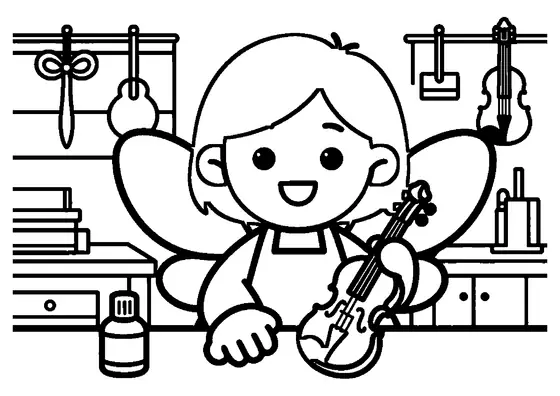
A fairy jewelry maker carefully polishes amber beads and tiny stones at a sturdy oak workbench.

A4 format (portrait), black outlines on a white background · for home and classroom use
All coloring pages: Fairy Coloring Pages
Similar coloring pages: Fairy Coloring Pages




What else can you print? Free, no account needed
Custom Name Coloring Pages
Enter your child's name to generate a custom coloring page featuring large outline letters to color and decorate.
Open generator →Connect the Dots Generator
Eight connect-the-dots pictures across three difficulty levels. Features faint outline guides for younger children and dots only for older kids.
Open generator →Printables
Worksheets, tracing lines, mazes and dot-to-dots in A4.
Browse printables →
Crafting Amber Jewelry at a Workbench
At a solid oak workbench, a fairy artisan shapes and polishes natural amber beads to craft a delicate necklace. Lapidary handiwork requires patience and precise tool handling to transform raw tree resins and small pebbles into refined decorative jewelry pieces.
The Origins and Properties of Amber
Amber is fossilized tree resin that formed millions of years ago when ancient pine trees released sticky sap to heal wounded bark. Unlike cold mineral gemstones, amber feels warm to the touch and floats in saltwater due to its relatively low physical density.
Authentic Colors of Amber and Jewelry Workbenches
- Natural amber beads: translucent honey yellow, warm orange, or deep cognac brown
- Oak jeweler workbench: rich medium brown with dark brown wood rings
- Polished stone beads: slate gray, milky white, or mottled jasper red
- Fairy wings: soft iridescent blue or translucent pearl white