
Dragon by an Old Stone Olive Press
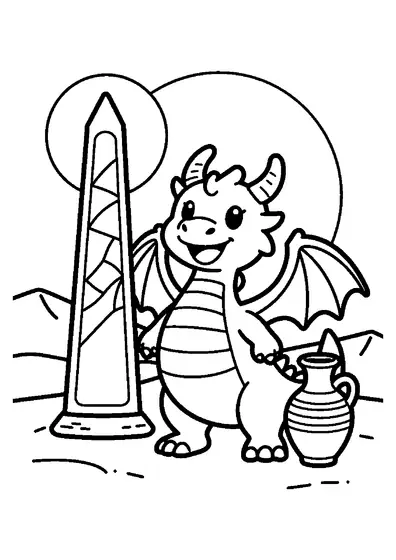
A cheerful dragon sits relaxed in a sunny courtyard beside a traditional stone olive press and a container jug.

A4 format (landscape), black outlines on a white background · for home and classroom use
All coloring pages: Dragon Coloring Pages
Similar coloring pages: Dragon Coloring Pages


What else can you print? Free, no account needed
Custom Name Coloring Pages
Enter your child's name to generate a custom coloring page featuring large outline letters to color and decorate.
Open generator →Connect the Dots Generator
Eight connect-the-dots pictures across three difficulty levels. Features faint outline guides for younger children and dots only for older kids.
Open generator →Printables
Worksheets, tracing lines, mazes and dot-to-dots in A4.
Browse printables →
A Dragon Resting by a Stone Olive Press
This scene features a dragon sitting in a sunlit courtyard next to an ancient stone olive press. A storage jug rests beside the milling equipment.
Ancient Olive Oil Extraction
Stone olive presses have been used in Mediterranean regions for thousands of years to extract rich oil from harvested olives. Heavy circular stones were rotated over a basin to crush the fruit into a paste, which was then squeezed under immense pressure to release pure oil into clay vessels.
Authentic Colors of an Olive Press Courtyard
- Dragon scales: Mediterranean dragons can be rendered in olive green, warm bronze, or terracotta orange hues.
- Stone press: Carved limestone or granite pressing stones display light cream, mottled gray, or warm beige shades.
- Storage jug: Traditional ceramic jugs exhibit unglazed reddish terracotta or glazed earthenware yellow and brown tones.
- Courtyard ground: Stone paving or packed clay courtyards feature dusty brown, sand, and pale gray colors.