
Dragon by a Sundial in the Garden
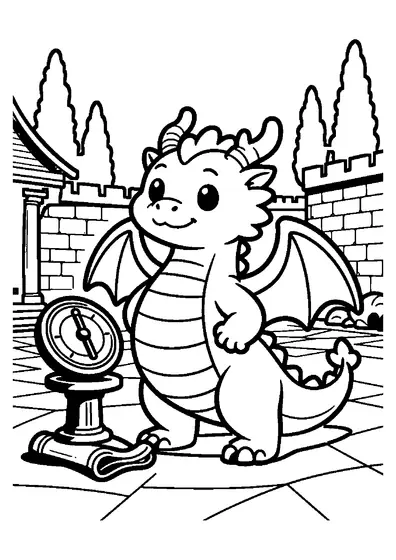
A peaceful dragon rests beside an ancient solar clock within a quiet stone garden courtyard.

A4 format (landscape), black outlines on a white background · for home and classroom use
All coloring pages: Dragon Coloring Pages
Similar coloring pages: Dragon Coloring Pages



What else can you print? Free, no account needed
Custom Name Coloring Pages
Enter your child's name to generate a custom coloring page featuring large outline letters to color and decorate.
Open generator →Connect the Dots Generator
Eight connect-the-dots pictures across three difficulty levels. Features faint outline guides for younger children and dots only for older kids.
Open generator →Printables
Worksheets, tracing lines, mazes and dot-to-dots in A4.
Browse printables →
Garden Courtyard with a Stone Solar Clock
In a quiet outdoor garden setting, a dragon lies beside a carved stone sundial. The courtyard environment combines sculptured stonework with natural garden surroundings where sunlight casts daily shadows.
How Sundials Track Time Using Sun Shadows
Sundials represent one of humanity's earliest timekeeping inventions, relying entirely on the apparent motion of the sun across the sky. An angled gnomon casts a sharp shadow onto a calibrated stone dial plate marked with hour lines. As Earth rotates on its axis throughout the day, the shadow steadily sweeps across the dial face, indicating the solar hour.
Natural Colors of Garden Sundials and Courtyard Stones
- Stone sundial: Light granite gray or weathered beige sandstone
- Courtyard paving: Warm terracotta reddish-brown or slate gray pavers
- Dragon hide: Warm amber gold, olive green, or rusty orange
- Garden plants: Deep leafy green with rich brown garden soil