
Dragon by a Raised Village Granary
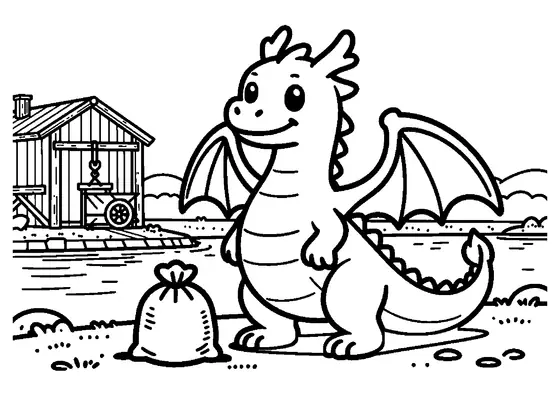
A mythical creature resting near an elevated farm storehouse brings fantasy elements to a traditional rural setting.

A4 format (landscape), black outlines on a white background · for home and classroom use
All coloring pages: Dragon Coloring Pages
Similar coloring pages: Dragon Coloring Pages



What else can you print? Free, no account needed
Custom Name Coloring Pages
Enter your child's name to generate a custom coloring page featuring large outline letters to color and decorate.
Open generator →Connect the Dots Generator
Eight connect-the-dots pictures across three difficulty levels. Features faint outline guides for younger children and dots only for older kids.
Open generator →Printables
Worksheets, tracing lines, mazes and dot-to-dots in A4.
Browse printables →
Dragon at a Rural Storehouse
A legendary dragon spends time in a quiet countryside village next to a traditional granary built high off the ground. Nearby items include a heavy sack filled with harvested grain and a stoneware water jug placed on the soil. The elevated wooden building serves as a protective storage structure for harvested crops in agricultural settlements.
Historical Purpose of Raised Granaries
Elevated farm buildings were designed throughout history to keep harvested crops safe from moisture and roaming pests. Raising the floor on stone posts or wooden stilts created natural air circulation that prevented mold growth in stored grain. Communities relied on these specialized wooden structures to protect their food supply through difficult winter seasons.
Natural Colors of the Countryside Scene
- Dragon scales: shades of green, bronze, or terracotta often associated with mythical earth creatures
- Granary timber: aged brown, weathered tan, or dark charcoal from exposure to outdoor elements
- Grain sack: pale beige, rough cream, or light tan woven burlap fabric
- Water jug: reddish terracotta, glazed brown ceramic, or matte gray stoneware
- Harvested grain: golden yellow, soft straw, or warm amber tones