
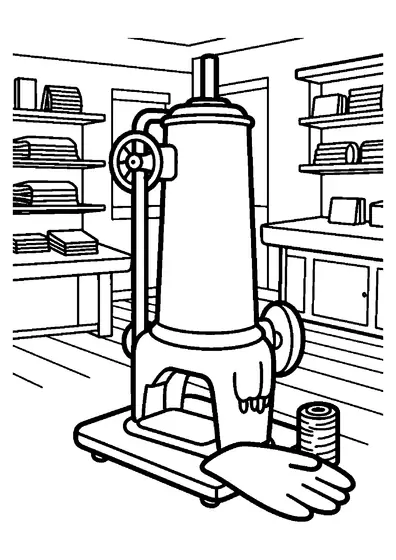
Tailor's Sewing Machine
A mechanical sewing machine with a needle bar, handwheel, and base stands as classic tailor shop equipment.

A4 format (landscape), black outlines on a white background · for home and classroom use
All coloring pages: Jobs and Professions Coloring Pages
Similar coloring pages: Jobs and Professions Coloring Pages


What else can you print? Free, no account needed
Custom Name Coloring Pages
Enter your child's name to generate a custom coloring page featuring large outline letters to color and decorate.
Open generator →Connect the Dots Generator
Eight connect-the-dots pictures across three difficulty levels. Features faint outline guides for younger children and dots only for older kids.
Open generator →Printables
Worksheets, tracing lines, mazes and dot-to-dots in A4.
Browse printables →
Traditional Sewing Machines in Tailoring
A sewing machine is a textile assembly device used by tailors and dressmakers to stitch fabric and craft clothing. The machine features a heavy base housing internal gears, a prominent handwheel to control manual movement, and a vertical needle bar. Tailors operate these specialized workspace machines to join garment pieces with quick, precise thread stitches.
The Invention and Impact of Mechanical Sewing
Mechanical sewing machines revolutionized garment production in the nineteenth century, dramatically reducing the time needed to make clothes by hand. Early models relied on hand cranks or foot treadles before electric motors were integrated into workshop machinery. Durable cast iron construction gave vintage machines long lifespans, allowing tailor shops to produce sturdy custom garments.
Colors of Classic Tailor Sewing Machines
- Main machine body: gloss black, enamel green, or dark cast iron gray
- Metal handwheel: chrome silver, polished brass, or dark gray
- Needle bar and foot: shiny metallic silver
- Sturdy machine base: dark iron gray, black, or polished wood brown