
Museum Conservator with a Vase
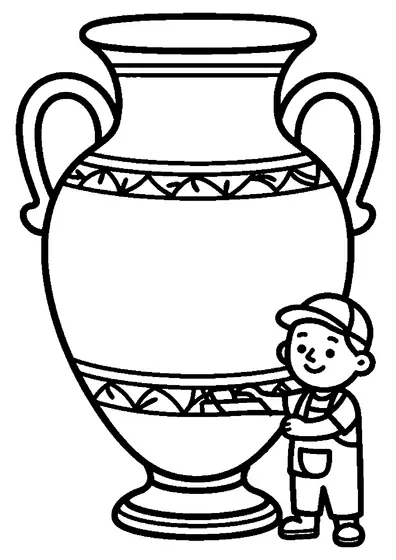
A skilled museum conservator inspects an ancient vase using a soft cleaning brush inside an exhibition room.

A4 format (portrait), black outlines on a white background · for home and classroom use
All coloring pages: Jobs and Professions Coloring Pages
Similar coloring pages: Jobs and Professions Coloring Pages


What else can you print? Free, no account needed
Custom Name Coloring Pages
Enter your child's name to generate a custom coloring page featuring large outline letters to color and decorate.
Open generator →Connect the Dots Generator
Eight connect-the-dots pictures across three difficulty levels. Features faint outline guides for younger children and dots only for older kids.
Open generator →Printables
Worksheets, tracing lines, mazes and dot-to-dots in A4.
Browse printables →
Art Preservation in the Museum Gallery
A museum conservator works carefully in an exhibition room next to a large antique vase, holding a soft brush designed for delicate preservation work. Conservators use gentle techniques to clean, repair, and safeguard historical artifacts for public display.
Science Behind Artifact Conservation
Soft brushes made from natural hair allow conservators to sweep away dust without scratching fragile ceramic glazes or ancient paint layer surfaces. Exhibition rooms maintain controlled humidity and temperature levels to prevent valuable historical objects from deteriorating over time.
Colors of Historic Artifacts and Conservation Tools
- Ancient ceramic vase: Terracotta orange, antique cream, or glazed cobalt blue
- Soft cleaning brush: Natural wood handle with pale tan or white bristles
- Conservator lab coat: Clean white or light blue fabric
- Exhibition room wall: Neutral beige, warm gray, or deep navy blue