
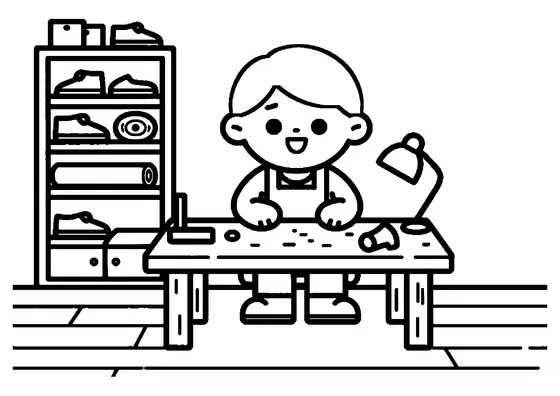
Jeweler Using a Microscope in a Jewelry Workshop
A jeweler examines small crafted pieces with a microscope at a workshop bench.

A4 format (portrait), black outlines on a white background · for home and classroom use
All coloring pages: Jobs and Professions Coloring Pages
Similar coloring pages: Jobs and Professions Coloring Pages




What else can you print? Free, no account needed
Custom Name Coloring Pages
Enter your child's name to generate a custom coloring page featuring large outline letters to color and decorate.
Open generator →Connect the Dots Generator
Eight connect-the-dots pictures across three difficulty levels. Features faint outline guides for younger children and dots only for older kids.
Open generator →Printables
Worksheets, tracing lines, mazes and dot-to-dots in A4.
Browse printables →
Precision work in a jewelry workshop
The jeweler creates and inspects small pieces at a dedicated workbench. A microscope makes tiny surfaces, settings, and connections easier to examine during precise work. Jewelry making can involve shaping metal, joining components, setting stones, polishing surfaces, and checking that every part is secure.
Why magnification is useful to jewelers
Many jewelry components are too small to inspect comfortably with the unaided eye. Magnification can reveal a loose setting, a fine scratch, or an uneven connection before the piece is completed. It also helps the jeweler position tools accurately while working on delicate areas.
Real colors of jewelry-making materials
- Gold: naturally rich yellow, but alloys may also appear white or rose colored
- Silver: bright silvery white, sometimes darkened by tarnish
- Platinum: silvery white with a cool gray tone
- Gemstones: found in many colors, including red, blue, green, purple, and clear
- Jeweler's microscope: commonly white, black, or gray with clear glass lenses