
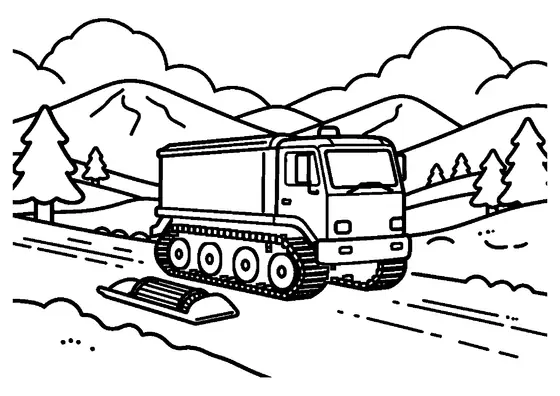
Forestry Water Truck
A heavy forestry water tanker stands in a forest clearing prepared to support woodland emergency crews.

A4 format (landscape), black outlines on a white background · for home and classroom use
All coloring pages: Jobs and Professions Coloring Pages
Similar coloring pages: Jobs and Professions Coloring Pages



What else can you print? Free, no account needed
Custom Name Coloring Pages
Enter your child's name to generate a custom coloring page featuring large outline letters to color and decorate.
Open generator →Connect the Dots Generator
Eight connect-the-dots pictures across three difficulty levels. Features faint outline guides for younger children and dots only for older kids.
Open generator →Printables
Worksheets, tracing lines, mazes and dot-to-dots in A4.
Browse printables →
Forestry Water Supply Vehicles in Woodland Areas
Forestry teams use large water tankers to transport thousands of gallons of water into remote woodland clearings. Equipped with high-capacity storage tanks and heavy hoses, these trucks provide crucial water supplies in locations far from municipal fire hydrants.
Fighting Forest Fires in Remote Wilderness
Wildland firefighting vehicles often carry off-road chassis and all-wheel drive systems to navigate steep mountain trails and muddy terrain. Specialized pumps attached to the onboard tank can draw water directly from nearby lakes, rivers, or streams to refill the tank quickly during wildland operations.
Standard Colors for Forestry Water Trucks
- Vehicle body: high-visibility red, lime yellow, or forest green
- Water tank: metallic silver aluminum or white polymer coating
- Fire hose: durable red, yellow, or off-white canvas weave
- Truck tires: heavy black off-road tread rubber
- Forest clearing background: deep natural greens and earthy brown soil tones