
Forest Ranger with Rescued Deer
Forest rangers safeguard natural woodland habitats while providing care and supplemental food to vulnerable wildlife.
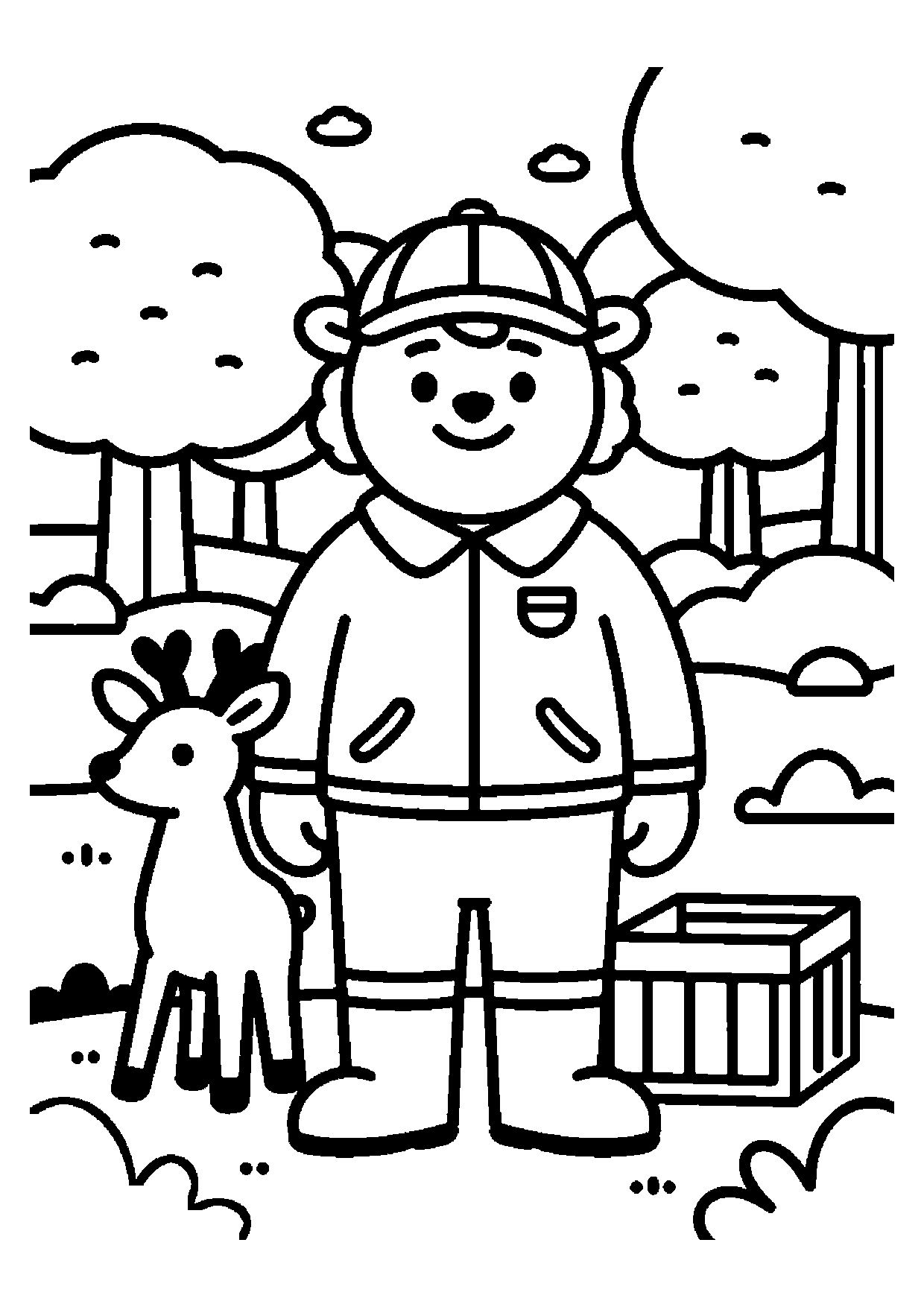
A4 format (portrait), black outlines on a white background · for home and classroom use
All coloring pages: Jobs and Professions Coloring Pages
Similar coloring pages: Jobs and Professions Coloring Pages


What else can you print? Free, no account needed
Custom Name Coloring Pages
Enter your child's name to generate a custom coloring page featuring large outline letters to color and decorate.
Open generator →Connect the Dots Generator
Eight connect-the-dots pictures across three difficulty levels. Features faint outline guides for younger children and dots only for older kids.
Open generator →Printables
Worksheets, tracing lines, mazes and dot-to-dots in A4.
Browse printables →
Wildlife Protection in Natural Forest Clearings
Forest rangers monitor woodland areas to ensure native animals remain safe from environmental hazards. Setting up feed crates in peaceful forest clearings helps injured or rescued deer regain strength before returning entirely to their wild natural surroundings.
The Duties of Conservation Rangers
Forest rangers manage forest ecology by surveying plant health, tracking animal populations, and providing emergency aid to injured wildlife. Placing feed crates in designated clearings supports animal nutrition during severe winter months when natural forage is scarce under deep snow.
Natural Colors of Woodland Wildlife and Rangers
- Forest ranger uniform: Earthy olive green or khaki shirt and trousers with a brown belt
- Deer coat: Reddish-brown or tan fur with a lighter cream underside and tail accent
- Feed crate: Weathered natural wood brown or rustic tan finish
- Ranger hat: Dark forest green or classic medium brown felt or canvas