
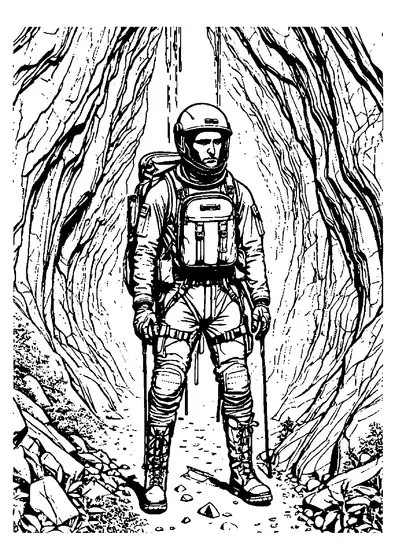
Cave Rescue Worker with Equipment
Underground emergency teams use specialized equipment to navigate dark cave openings and assist stranded explorers.

A4 format (portrait), black outlines on a white background · for home and classroom use
All coloring pages: Jobs and Professions Coloring Pages
Similar coloring pages: Jobs and Professions Coloring Pages

What else can you print? Free, no account needed
Custom Name Coloring Pages
Enter your child's name to generate a custom coloring page featuring large outline letters to color and decorate.
Open generator →Connect the Dots Generator
Eight connect-the-dots pictures across three difficulty levels. Features faint outline guides for younger children and dots only for older kids.
Open generator →Printables
Worksheets, tracing lines, mazes and dot-to-dots in A4.
Browse printables →
Cave Rescue Workers and Underground Safety Gear
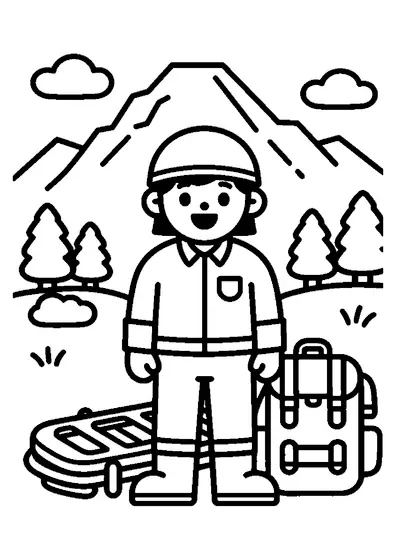
Cave rescue specialists train extensively to navigate subterranean passages and assist injured individuals underground. Near cave entrances, rescue teams organize essential response gear, including folded stretchers and heavy-duty equipment bags. Their specialized clothing protects them against cold temperatures, moisture, and sharp rock surfaces during long underground operations.
How Cave Rescue Operations Function
Subterranean rescue teams rely on specialized stretchers designed to fit through tight rock squeezes and ascend vertical shaft walls safely. Communication underground often requires field-deployed wire phones, as conventional radio waves cannot travel through thick rock formations.
Real Colors of Underground Rescue Gear
- Rescue worker jumpsuit: dark blue, orange, or reinforced red synthetic fabric
- Rescue helmet: high-visibility yellow or red with a bright white LED headlamp
- Folded stretchers: yellow, orange, or olive green heavy-duty nylon webbing
- Equipment bag: weatherproof black or bright yellow canvas
- Cave entrance rocks: natural shade of limestone gray, slate, or brown earth