
Spinosaurus on a Marshy River Island
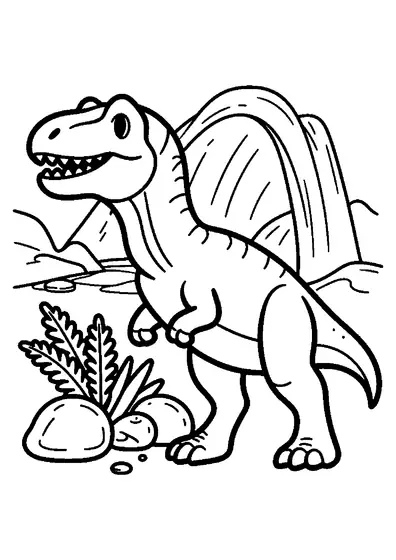
An impressive Spinosaurus with a prominent back sail rests on a marshy river island along a sweeping river bend.

A4 format (landscape), black outlines on a white background · for home and classroom use
All coloring pages: Predatory Dinosaur Coloring Pages
Similar coloring pages: Predatory Dinosaur Coloring Pages




What else can you print? Free, no account needed
Custom Name Coloring Pages
Enter your child's name to generate a custom coloring page featuring large outline letters to color and decorate.
Open generator →Connect the Dots Generator
Eight connect-the-dots pictures across three difficulty levels. Features faint outline guides for younger children and dots only for older kids.
Open generator →Printables
Worksheets, tracing lines, mazes and dot-to-dots in A4.
Browse printables →
Spinosaurus in a Marshy River Ecosystem
The Spinosaurus stands out among prehistoric predators due to its giant dorsal sail and semi-aquatic lifestyle. Situated on a marshy island at a river bend, this massive dinosaur was uniquely suited for life along prehistoric waterways. River systems provided rich feeding grounds where land meets water, supporting specialized carnivores that relied heavily on aquatic ecosystems.
Remarkable Facts About Spinosaurus
Spinosaurus had long, narrow jaws filled with conical teeth, similar to those of modern crocodilians, which were ideal for catching slippery fish. Its iconic dorsal sail was supported by tall neural spines extending from its vertebrae and could reach heights over five feet. Recent discoveries suggest Spinosaurus possessed a paddle-like tail that propelled it through river currents with great efficiency.
Natural Tones of Spinosaurus and Wetland Landscapes
- Spinosaurus body: slate gray, muddy olive brown, or riverbed tan
- Back sail: vibrant accents of maroon, dusky orange, or striped pattern designs
- River water: murky green, dark brown, or reflective sky blue tones
- Marshy island ground: dark peat brown, moss green, and muddy clay colors