
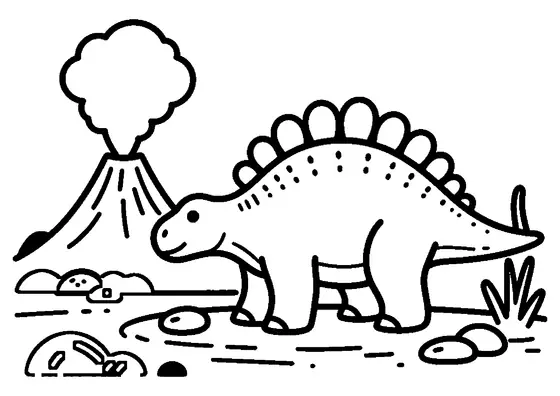
Monolophosaurus by a Rocky Forest Stream
A single-crested Monolophosaurus drinks from a clear stream in a rocky prehistoric forest.

A4 format (landscape), black outlines on a white background · for home and classroom use
All coloring pages: Dinosaur Coloring Pages
Similar coloring pages: Dinosaur Coloring Pages




What else can you print? Free, no account needed
Custom Name Coloring Pages
Enter your child's name to generate a custom coloring page featuring large outline letters to color and decorate.
Open generator →Connect the Dots Generator
Eight connect-the-dots pictures across three difficulty levels. Features faint outline guides for younger children and dots only for older kids.
Open generator →Printables
Worksheets, tracing lines, mazes and dot-to-dots in A4.
Browse printables →
Monolophosaurus beside a forest stream
Monolophosaurus is shown lowering its head to drink from a clear stream among rocks and forest vegetation. A single crest rises along the top of its head, giving the dinosaur its distinctive profile. The water and surrounding forest place this two-legged predator in a sheltered prehistoric landscape.
Drinking safely from flowing water
Animals at a stream must lower their heads while remaining alert to sounds and movement nearby. Flowing water often carries more oxygen than still water because it mixes continually with the air as it passes over rocks. The head crest of Monolophosaurus was formed from bones of the skull and may have served as a visual signal.
Natural colors of Monolophosaurus and the stream
- Monolophosaurus skin: its real color is unknown; brown, olive, gray, or muted rust are plausible options
- Head crest: an unknown color, possibly matching the skin or forming a contrasting display
- Teeth and claws: ivory, cream, or pale tan
- Stream water: clear with blue-green, gray, or brown reflections from its surroundings
- Stream rocks and forest vegetation: gray or brown stone with varied natural greens