
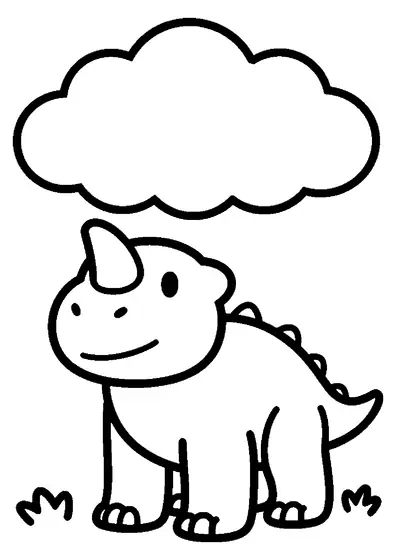
Pachyrhinosaurus with a Sled
This winter scene features a young Pachyrhinosaurus outdoors near a wooden sled surrounded by snowdrifts and pine trees.

A4 format (landscape), black outlines on a white background · for home and classroom use
All coloring pages: Herbivorous Dinosaur Coloring Pages
Similar coloring pages: Herbivorous Dinosaur Coloring Pages


What else can you print? Free, no account needed
Custom Name Coloring Pages
Enter your child's name to generate a custom coloring page featuring large outline letters to color and decorate.
Open generator →Connect the Dots Generator
Eight connect-the-dots pictures across three difficulty levels. Features faint outline guides for younger children and dots only for older kids.
Open generator →Printables
Worksheets, tracing lines, mazes and dot-to-dots in A4.
Browse printables →
A Winter Scene with Pachyrhinosaurus and a Sled
The setting combines a plant-eating dinosaur known for its distinctive flattened nose boss with a snow-covered environment containing pine trees, snowdrifts, and a wooden sled. Pachyrhinosaurus lived in northern prehistoric landscapes, making cold surroundings a natural backdrop for exploring prehistoric life.
Prehistoric Winter Survival
Fossils of Pachyrhinosaurus have been uncovered in northern North America, including Alaska, suggesting these dinosaurs were well adapted to cooler polar climates. Unlike many reptiles today that require constant warmth, large herbivorous dinosaurs maintained internal temperature through their large body mass. Wood from ancient conifers provided sturdy material for early humans millions of years later to craft simple winter sleds.
Natural Colors of Pachyrhinosaurus and Winter Settings
- Pachyrhinosaurus skin: gray, dull brown, or muted olive tone
- Nose boss and frill: darker charcoal or earthy gray
- Pine trees: deep green needles with brown bark
- Wooden sled: natural brown, beige, or weathered gray timber
- Snowdrifts: soft white with pale blue shadow tones