
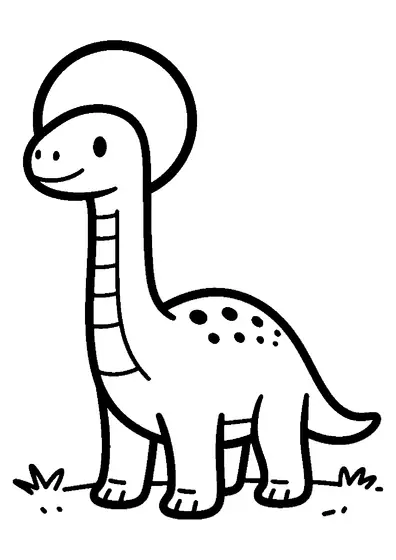
Lesothosaurus by the Grass
A slender Lesothosaurus stands in profile next to a tuft of grass while balancing on its long hind legs.

A4 format (landscape), black outlines on a white background · for home and classroom use
All coloring pages: Herbivorous Dinosaur Coloring Pages
Similar coloring pages: Herbivorous Dinosaur Coloring Pages


What else can you print? Free, no account needed
Custom Name Coloring Pages
Enter your child's name to generate a custom coloring page featuring large outline letters to color and decorate.
Open generator →Connect the Dots Generator
Eight connect-the-dots pictures across three difficulty levels. Features faint outline guides for younger children and dots only for older kids.
Open generator →Printables
Worksheets, tracing lines, mazes and dot-to-dots in A4.
Browse printables →
The Swift Lesothosaurus Standing by Prairie Grass
Lesothosaurus was an early plant-eating dinosaur known for its light body frame and remarkable running speed. Standing beside low vegetation such as a tuft of grass, this small herbivore inhabited dry, seasonal environments during the Early Jurassic period. Its streamlined body structure allowed it to evade larger predators across prehistoric landscapes.
Biological Features of Lesothosaurus
Lesothosaurus possessed disproportionately long hind legs and a slender, flexible tail that provided balance while running at high speeds. Its small head contained pointed teeth suitable for cropping soft plant leaves and small shoots. Paleontologists consider Lesothosaurus one of the most primitive ornithischian dinosaurs, offering valuable clues about the origin of later herbivorous species.
Real Natural Colors of Lesothosaurus
- Lesothosaurus back and sides: sandy tan, tawny brown, or light olive green
- Underside body skin: pale cream, soft gray, or off-white
- Long legs and claws: dark grayish brown or dusky tan
- Grass tuft: dry golden yellow, pale green, or bright spring green