
Amargasaurus Looks at a Water Lily Leaf
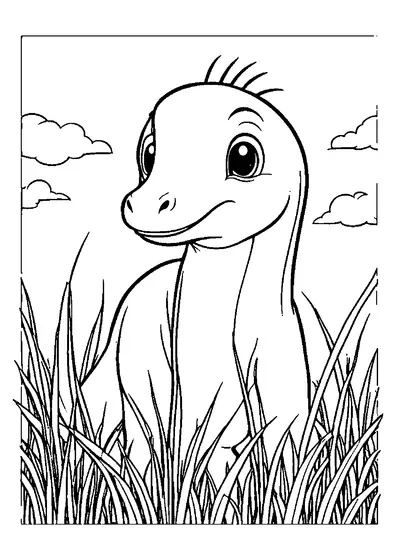
A smiling Amargasaurus pauses at the water's edge beside water lily leaves and tall aquatic plants with buds.

A4 format (portrait), black outlines on a white background · for home and classroom use
All coloring pages: Herbivorous Dinosaur Coloring Pages
Similar coloring pages: Herbivorous Dinosaur Coloring Pages




What else can you print? Free, no account needed
Custom Name Coloring Pages
Enter your child's name to generate a custom coloring page featuring large outline letters to color and decorate.
Open generator →Connect the Dots Generator
Eight connect-the-dots pictures across three difficulty levels. Features faint outline guides for younger children and dots only for older kids.
Open generator →Printables
Worksheets, tracing lines, mazes and dot-to-dots in A4.
Browse printables →
What the Amargasaurus coloring page shows
The long-necked herbivore stands on the shore and looks toward a water lily leaf. Prominent spines run along its neck and back, while broad floating leaves and upright waterside plants surround it. The calm setting connects this unusual dinosaur with a freshwater habitat.
Fascinating facts about Amargasaurus
Amargasaurus belonged to the sauropod family, but its neck was shorter than those of many famous sauropods. Paired bony spines rose from its neck vertebrae; scientists continue to discuss whether they supported a covering, formed a display structure, or served another purpose.
Real-world colors of Amargasaurus and the waterside plants
- Amargasaurus skin: unknown; natural browns, olive greens, and muted grays are scientifically cautious possibilities
- Neck spines: their original color is unknown and may have differed from the body if used for display
- Water lily leaves: medium to deep green, sometimes with reddish or purple areas
- Water lily buds: green outside, with petals that may open white, pink, yellow, or purple depending on the species
- Shore plants: green stems and leaves, with older growth turning yellow-brown