
Raccoon at the Winter Window
A curious raccoon appears at a winter window decorated with evergreen branches, ornaments, and candles.

A4 format (landscape), black outlines on a white background · for home and classroom use
All coloring pages: Pattern and Ornament Coloring Pages
Similar coloring pages: Pattern and Ornament Coloring Pages


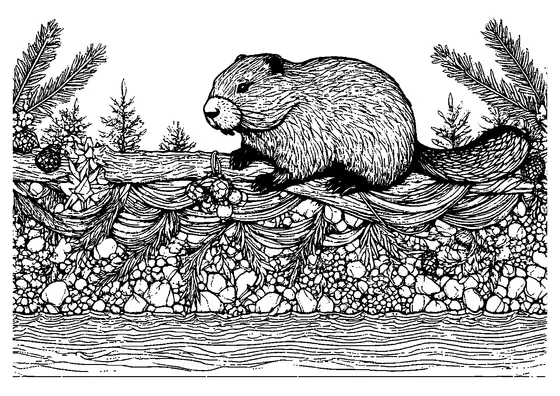
A Raccoon at a Festive Winter Window
The raccoon leans into the window of a winter home, surrounded by seasonal decorations. Evergreen branches and hanging ornaments frame the animal, while candles add a warm household detail to the setting.
Interesting Facts About Raccoons in Winter
Raccoons do not truly hibernate, but they may remain sheltered for long periods during severe cold. They rely partly on stored body fat when food is scarce and may share a den with other raccoons in winter. Their highly sensitive front paws help them examine food and objects, even when visibility is poor.
Real-World Colors for the Winter Scene
- Raccoon fur: salt-and-pepper gray, brownish gray, or silver gray
- Facial mask and ringed tail markings: black or very dark brown
- Evergreen branches: deep green or blue-green, with brown stems
- Glass ornaments: commonly red, gold, silver, blue, or green
- Candle flames: yellow near the tip and orange around the brighter center