
Lacy Floral Easter Egg
A large Easter egg covered in geometric ornaments sits at the center of a delicate arrangement of spring flowers.

A4 format (portrait), black outlines on a white background · for home and classroom use
All coloring pages: Pattern and Ornament Coloring Pages
Similar coloring pages: Pattern and Ornament Coloring Pages


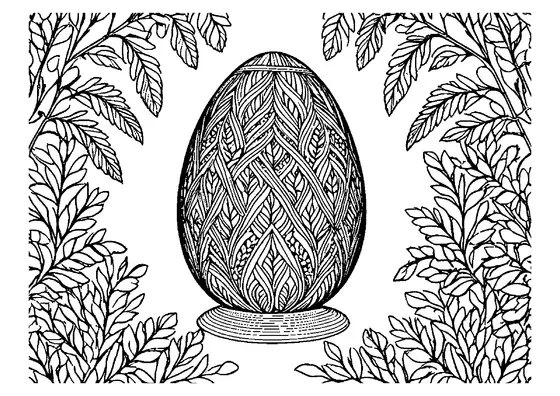


A Lacy Floral Easter Egg
The decorated Easter egg forms the centerpiece of an abundant floral composition. Geometric bands, repeating shapes, and lace-like ornaments cover its surface, while blossoms and leaves create a spring arrangement around it. The contrast between the egg’s orderly patterns and the varied forms of the flowers brings structure and natural softness together in one celebratory motif.
Decorated Eggs and Spring Traditions
Eggs have long been associated with new life and the return of spring. In many communities, families decorate them with dyes, painted symbols, plant shapes, or repeating geometric patterns. Floral motifs are especially fitting for the season because many plants begin a new cycle of growth as days become longer and warmer.
Traditional Colors for a Floral Easter Egg
- Egg ornaments: red, blue, green, yellow, purple, or orange in repeating combinations
- Geometric bands: contrasting pairs such as red and white, blue and gold, or green and yellow
- Spring flower petals: pink, violet, yellow, white, red, or pale blue, depending on the flower
- Flower centers: commonly yellow, gold, brown, or deep orange
- Leaves and stems: fresh green, yellow-green, or deeper forest green