
Tuna in Swirling Deep Waters Coloring Page
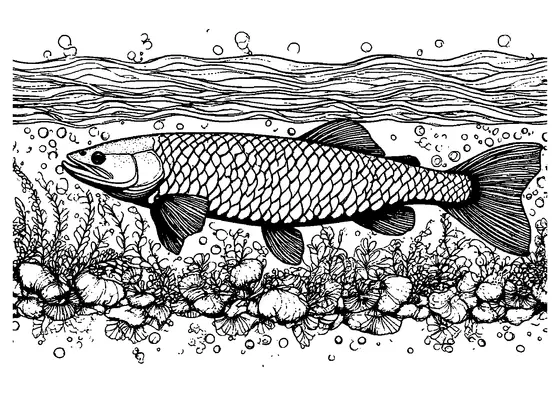
A large tuna swims through swirling deep water amid rolling waves, seaweed, bubbles, and marine ornaments.

A4 format (landscape), black outlines on a white background · for home and classroom use
All coloring pages: Ornate Animal Coloring Pages
Similar coloring pages: Ornate Animal Coloring Pages


A Tuna in Swirling Deep Waters
The tuna occupies the center of the underwater scene, moving through curling waves with seaweed and rising bubbles around its body. Decorative scale-like shapes and botanical forms cover the fish, while the surrounding marine patterns echo the movement of the water. The composition brings the powerful ocean swimmer together with a lively deep-water setting.
Fascinating Facts About Tuna in the Ocean
Tuna are built for continuous, efficient swimming and have streamlined bodies that reduce resistance in the water. They travel through open seas in search of smaller fish, squid, and crustaceans. Some tuna can keep parts of their bodies warmer than the surrounding water, which supports active muscles in cooler depths.
Real-Life Colors of Tuna and Deep Water
- Tuna back: dark metallic blue, blue-black, or deep greenish blue
- Tuna sides: silvery gray with a reflective sheen
- Tuna belly: pale silver or nearly white
- Fins: dusky blue, gray, or yellowish, depending on the species
- Seaweed: olive green, golden brown, red-brown, or deep green