
Kudu Antelope in a Thorn Halo
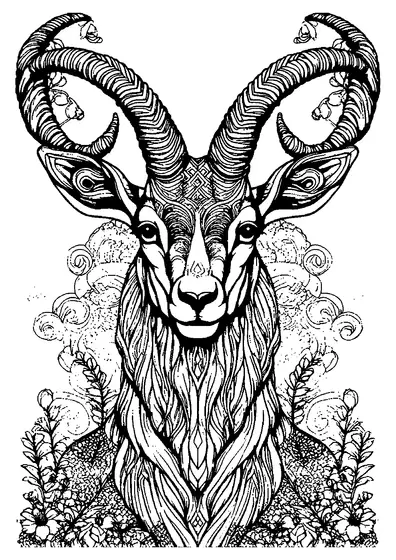
A front-facing kudu antelope is framed by a radiant halo and a wreath of leaves and roses, with its spiral horns rising above the flowers.

A4 format (portrait), black outlines on a white background · for home and classroom use
All coloring pages: Ornate Animal Coloring Pages
Similar coloring pages: Ornate Animal Coloring Pages



What the Kudu Antelope in a Thorn Halo Shows
The kudu appears in a balanced portrait viewed directly from the front. Its long, twisting horns form the tallest part of the composition, while the ears extend to either side of the patterned face. A radiant halo surrounds the head, and an ornamental wreath of rose blossoms and leaves fills the area around it. The result combines the recognizable features of a wild antelope with a formal botanical arrangement.
Fascinating Facts About Kudu Antelopes
Kudus live in wooded savannas and bushland, where their striped coats help them blend among branches, sunlight, and shadow. The impressive spiral horns belong to males and continue twisting as the animals mature. Kudus often browse on leaves, shoots, seedpods, and other plant material rather than grazing mainly on grass.
Natural Colors of the Kudu, Roses, and Leaves
- Kudu coat: warm gray-brown, reddish brown, or tawny brown
- Facial markings and body stripes: creamy white
- Spiral horns: dark brown to charcoal gray, often lighter near the ridges
- Rose petals: red, pink, cream, yellow, orange, or white
- Leaves: fresh green, olive green, or deep forest green