
Capercaillie among Heather Fans
An ornamental capercaillie stands among fanlike sprigs of heather and other forest greenery.

A4 format (portrait), black outlines on a white background · for home and classroom use
All coloring pages: Ornate Animal Coloring Pages
Similar coloring pages: Ornate Animal Coloring Pages


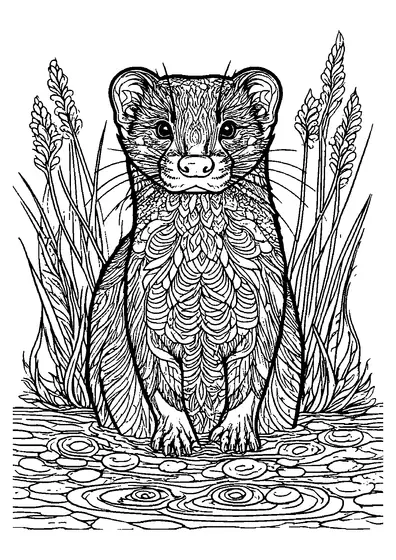


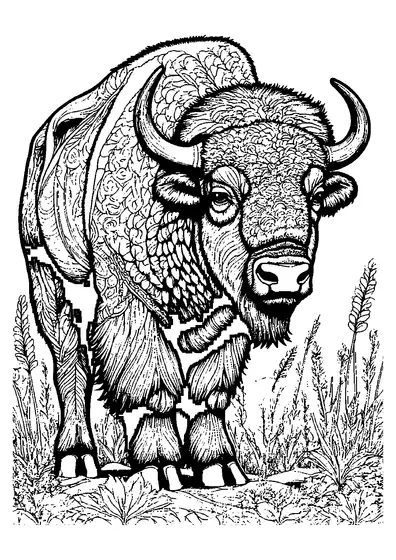
A capercaillie among heather fans
The woodland bird stands within a setting of heather sprigs and leafy vegetation. Decorative patterns fill its layered feathers, including the wings, breast, and broad tail. The surrounding plants echo the fanlike arrangement of the plumage and place the capercaillie in a forest-floor habitat.
Life among forest vegetation
Capercaillies favor extensive woodland where the ground layer can provide both food and cover. Their diet changes with the seasons and may include buds, shoots, leaves, berries, and conifer needles. Heather is part of the low vegetation found in many open or lightly wooded habitats within the bird’s range.
Natural colors of a capercaillie and heather
- Adult male plumage: mostly dark charcoal, brown, and black, with a glossy green breast
- Adult female plumage: mottled rust, brown, buff, and black
- Wing feathers: dark brown with lighter markings and, in males, a noticeable white patch
- Heather flowers: usually pink-purple, lilac, or occasionally white
- Heather stems and leaves: green, olive, or brownish green