
Water Lily in a Floating Rosette
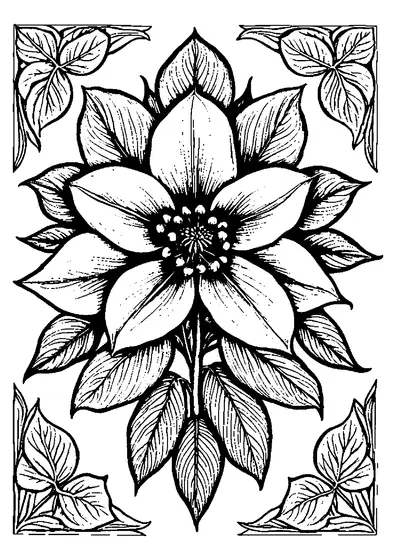
A many-petaled water lily floats among round lily pads, rippling water, and clusters of tall reeds.

A4 format (landscape), black outlines on a white background · for home and classroom use
All coloring pages: Flower Coloring Pages for Adults
Similar coloring pages: Flower Coloring Pages for Adults




Water Lily in a Floating Rosette
Seen from above, the large open water lily forms the center of the pond scene. Layers of petals radiate outward like a rosette, while rounded floating leaves spread across the moving surface. Tall reeds rise in groups along the right side and upper part of the water, surrounding the blossom with wetland vegetation.
Water Lily Facts
Water lily leaves float because their long flexible stalks connect them to roots anchored in the mud below. Tiny openings for gas exchange are mainly found on the upper surface of the leaves, where they remain exposed to the air rather than submerged.
Natural Water Lily Colors
- Petals: white, pink, yellow, blue, purple, or red, depending on the species
- Flower center: usually yellow or golden
- Lily pads: green, sometimes marked with reddish or purple areas
- Reeds: green during active growth and tan or brown when dry
- Pond water: blue, green, brown, or reflective silver depending on light and surroundings