
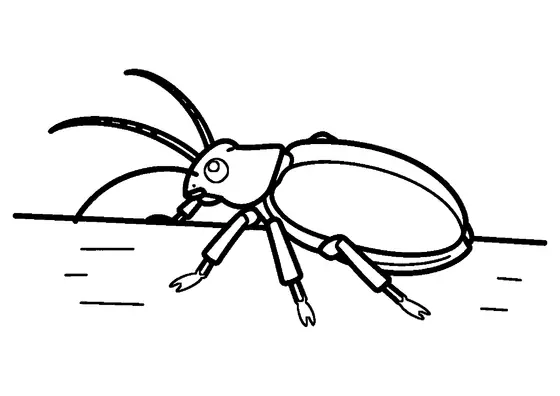
Woodland Beetle by a Pine Cone
A rounded woodland beetle stands quietly next to a large pine cone on the forest floor.

A4 format (landscape), black outlines on a white background · for home and classroom use
All coloring pages: Woodland Animal Coloring Pages
Similar coloring pages: Woodland Animal Coloring Pages




What else can you print? Free, no account needed
Custom Name Coloring Pages
Enter your child's name to generate a custom coloring page featuring large outline letters to color and decorate.
Open generator →Connect the Dots Generator
Eight connect-the-dots pictures across three difficulty levels. Features faint outline guides for younger children and dots only for older kids.
Open generator →Printables
Worksheets, tracing lines, mazes and dot-to-dots in A4.
Browse printables →
Woodland Beetle Beside a Pine Cone
The scene shows a rounded forest beetle positioned directly next to a large pine cone. The insect features a smooth, domed outer shell that contrasts with the textured scales of the nearby pine cone.
Forest Knowledge About Beetles and Cones
Pine cones open and close their woody scales depending on humidity, opening on dry days to release seeds and closing when damp to protect them. Many ground-dwelling woodland beetles crawl near fallen pine cones to seek shade, shelter from rain, and small moisture pockets underneath.
Colors of Woodland Beetles and Cones
- Smooth beetle shell: metallic dark blue, glossy black, or dark violet
- Beetle legs and antennae: shiny black or dark gray
- Underside of the beetle: dark reddish brown or charcoal black
- Pine cone scales: woody brown, tan, or reddish cinnamon