
Walrus on a Rocky Arctic Shore
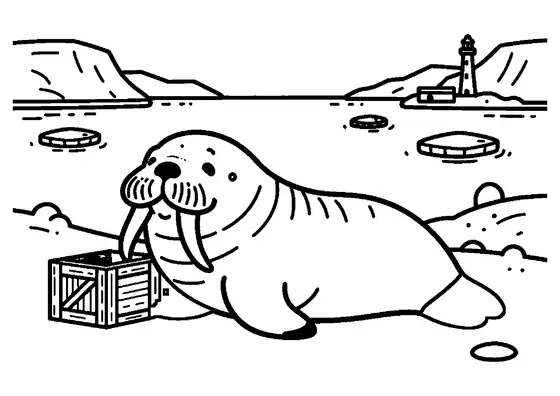
This ocean scene depicts a walrus taking a rest along the rocky coastline of the freezing Arctic Ocean.

A4 format (landscape), black outlines on a white background · for home and classroom use
All coloring pages: Wild Animal Coloring Pages
Similar coloring pages: Wild Animal Coloring Pages




What else can you print? Free, no account needed
Custom Name Coloring Pages
Enter your child's name to generate a custom coloring page featuring large outline letters to color and decorate.
Open generator →Connect the Dots Generator
Eight connect-the-dots pictures across three difficulty levels. Features faint outline guides for younger children and dots only for older kids.
Open generator →Printables
Worksheets, tracing lines, mazes and dot-to-dots in A4.
Browse printables →
Walruses resting on Arctic rocks
The walrus spends much of its life navigating cold northern ocean waters and hauling out onto coastal rocks or pack ice to rest. These large marine mammals have thick skin and a dense blubber layer that shields them from freezing temperatures. Long white tusks extend downward from their upper jaws, which they use to climb out of the water onto steep shores.
Facts about walrus behavior and habitats
Walruses rely on their sensitive whiskers, called vibrissae, to search the dark sea floor for clams, snails, and crabs. While resting on land or ice floes in large herds, designated sentinels remain alert to keep watch for potential danger. Their skin color actually changes depending on temperature, turning lighter or pale pink when basking in sunshine as blood vessels expand.
Natural colors of the walrus and Arctic environment
- Whiskers and long tusks: creamy white or ivory
- Walrus skin: cinnamon brown to pale reddish-pink
- Arctic Ocean water: deep navy blue or dark teal
- Coastal rocks: dark gray and slate black
- Ice chunks: brilliant white with blue highlights