
Leopard Resting on a Jungle Branch
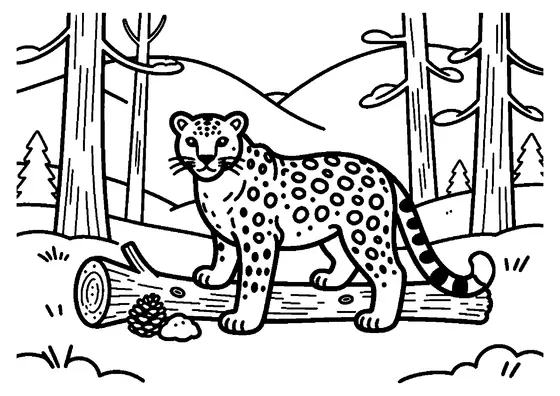
An illustration of a wild leopard resting high above the ground on a thick jungle branch.

A4 format (portrait), black outlines on a white background · for home and classroom use
All coloring pages: Wild Animal Coloring Pages
Similar coloring pages: Wild Animal Coloring Pages



What else can you print? Free, no account needed
Custom Name Coloring Pages
Enter your child's name to generate a custom coloring page featuring large outline letters to color and decorate.
Open generator →Connect the Dots Generator
Eight connect-the-dots pictures across three difficulty levels. Features faint outline guides for younger children and dots only for older kids.
Open generator →Printables
Worksheets, tracing lines, mazes and dot-to-dots in A4.
Browse printables →
Wild Leopard in the Dense Jungle
This page portrays an agile leopard taking a moment to rest while perched on a thick tree branch surrounded by a dense jungle habitat. The big cat sits high in the tropical canopy, where the surrounding leaves and foliage create a sheltered natural environment.
Fascinating Facts About Tree-Dwelling Leopards
Leopards are exceptionally skilled climbers among big cats, often spending their days lounging on broad limbs to stay out of the reach of ground predators. Their powerful muscular legs and sharp retractable claws allow them to carry heavy prey up into the canopy with remarkable ease. Resting elevated in the trees also gives these solitary hunters an excellent vantage point to monitor their territory below.
Natural Colors of the Jungle Leopard
- Leopard fur: Golden yellow or tawny coat covered in black rosette spots
- Leopard eyes: Bright yellow, green, or pale blue
- Tree branch bark: Dark brown or grayish rough timber
- Jungle leaves: Deep green, olive, and emerald tropical foliage