
African Spiny-Tailed Lizard on a Desert Rock
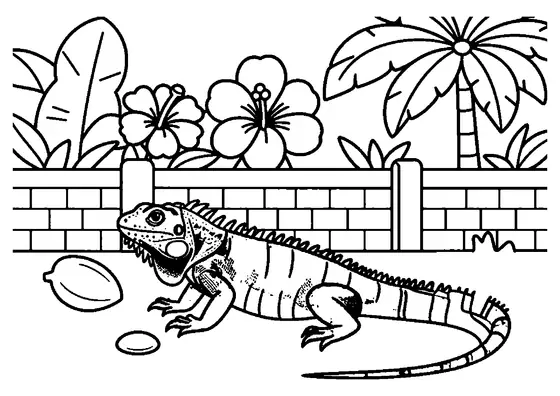
This desert reptile page depicts an African spiny-tailed lizard resting atop a sun-warmed rock formation.

A4 format (landscape), black outlines on a white background · for home and classroom use
All coloring pages: Wild Animal Coloring Pages
Similar coloring pages: Wild Animal Coloring Pages



What else can you print? Free, no account needed
Custom Name Coloring Pages
Enter your child's name to generate a custom coloring page featuring large outline letters to color and decorate.
Open generator →Connect the Dots Generator
Eight connect-the-dots pictures across three difficulty levels. Features faint outline guides for younger children and dots only for older kids.
Open generator →Printables
Worksheets, tracing lines, mazes and dot-to-dots in A4.
Browse printables →
African Spiny-Tailed Lizard in Desert Environments
The African spiny-tailed lizard, also known as a uromastyx, inhabits arid stone landscapes across northern Africa. Frequently seen basking on desert rocks during morning hours, this heavy-bodied reptile absorbs thermal energy from the stone to regulate its internal body temperature before foraging.
Natural Defense Mechanism
When threatened by predators near rocky outcrops, the lizard wedges itself inside narrow stone crevices and blocks the entrance with its heavy, spiked tail. The armored tail scale rings form an effective shield that prevents attackers from pulling the animal out of its hideout.
Authentic Colors of the Spiny-Tailed Lizard
- Lizard body scales: sandy yellow, olive green, or rusty orange depending on heat and species
- Spiked tail rings: muted tan or dark gray with sharp yellow-tipped spines
- Lizard belly: off-white or pale cream with faint grayish speckles
- Desert rock surface: warm reddish-brown, buff, or light granite gray