
Little Frog Looking to the Side
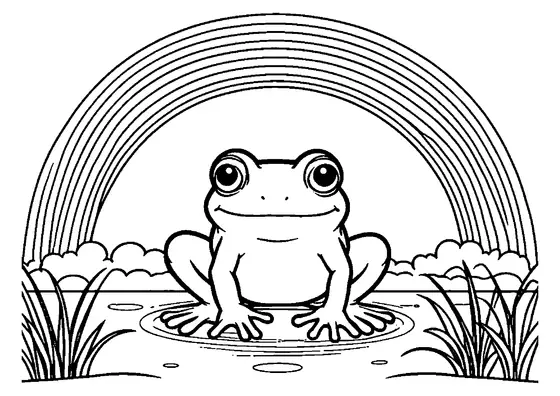
A small frog sits on a water lily leaf, turning toward the side amid reeds and calm pond scenery.

A4 format (landscape), black outlines on a white background · for home and classroom use
All coloring pages: Animal Coloring Pages
Similar coloring pages: Animal Coloring Pages


What else can you print? Free, no account needed
Custom Name Coloring Pages
Enter your child's name to generate a custom coloring page featuring large outline letters to color and decorate.
Open generator →Connect the Dots Generator
Eight connect-the-dots pictures across three difficulty levels. Features faint outline guides for younger children and dots only for older kids.
Open generator →Printables
Worksheets, tracing lines, mazes and dot-to-dots in A4.
Browse printables →
What the Little Frog Looking to the Side Scene Shows
The frog rests in the foreground on a floating water lily leaf and faces to the right. Tall groups of reeds rise along both sides of the pond, and gentle hills can be seen beyond the water. The animal's sideways glance gives the moment an alert, watchful quality, as though it has noticed movement somewhere nearby.
Fascinating Facts About Frogs at a Pond
A water lily leaf can serve as a resting place where a frog stays close to both air and water. Reeds around pond margins provide cover from predators and support many of the insects that frogs eat. Frogs also rely on moist surroundings because their skin plays an important role in breathing and absorbing water.
Real-Life Colors of the Frog and Its Habitat
- Frog skin: often green, olive, brown, or mottled, depending on the species
- Frog eyes: commonly gold, bronze, brown, or dark around the pupil
- Water lily leaf: medium to deep green, sometimes reddish underneath
- Reeds: green leaves with green, tan, or brown stems
- Pond water and distant hills: blue-green or brown water, with hills in seasonal greens or earthy browns