
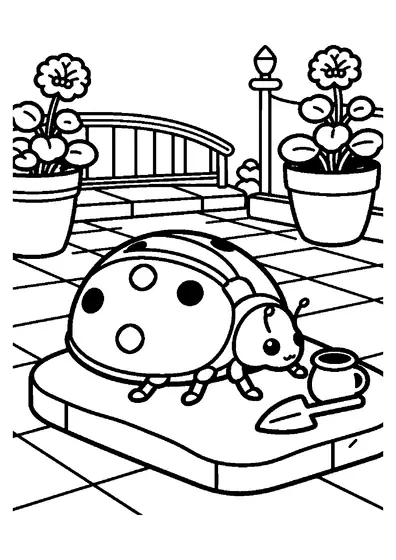
Ladybug on a Tree Stump in a Woodland Clearing
Deep in a forest clearing, a ladybug crawls across an old tree stump surrounded by pine needles and green ferns.

A4 format (portrait), black outlines on a white background · for home and classroom use
All coloring pages: Ladybug Coloring Pages
Similar coloring pages: Ladybug Coloring Pages




What else can you print? Free, no account needed
Custom Name Coloring Pages
Enter your child's name to generate a custom coloring page featuring large outline letters to color and decorate.
Open generator →Connect the Dots Generator
Eight connect-the-dots pictures across three difficulty levels. Features faint outline guides for younger children and dots only for older kids.
Open generator →Printables
Worksheets, tracing lines, mazes and dot-to-dots in A4.
Browse printables →
Ladybugs on Forest Tree Stumps
Decaying tree stumps in woodland clearings create rich habitats for insects, fungi, and forest plants. As wood breaks down, it creates nutrient-dense soil where shade-loving ferns thrive around the base of the stump. Ladybugs use fallen logs and stumps as hunting grounds and resting places while exploring the forest floor.
Ecosystems of Old Woodland Stumps
A single decaying stump supports dozens of insect species, mosses, and microorganisms that decompose dead wood. Pine needles accumulating on the forest floor form a damp blanket that retains moisture and shelters hibernating beetles. Sunlight filtering through the canopy onto clearings warms log surfaces, attracting active insects.
Colors of Forest Ecosystems
- Ladybug elytra: dark orange or deep red with solid black dots
- Weathered tree stump: dark brown, charcoal gray, or mossy olive
- Fern leaves: vibrant emerald green or forest green
- Pine needles: rusty reddish-brown when fallen, dark green when fresh
- Forest floor soil: rich dark brown earth with gray pebbles