
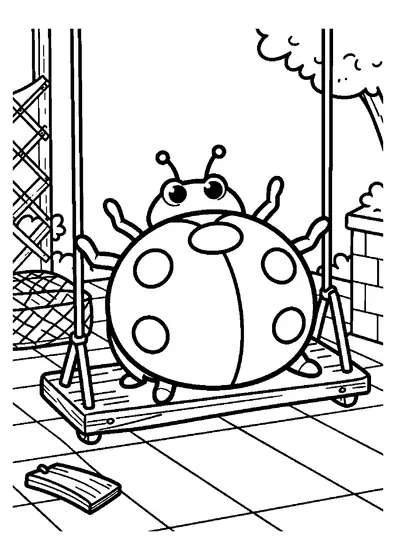
Ladybug on a Stone Garden Sundial
A ladybug perches on the engraved face of an antique stone sundial in a sunny garden setting.

A4 format (portrait), black outlines on a white background · for home and classroom use
All coloring pages: Ladybug Coloring Pages
Similar coloring pages: Ladybug Coloring Pages

What else can you print? Free, no account needed
Custom Name Coloring Pages
Enter your child's name to generate a custom coloring page featuring large outline letters to color and decorate.
Open generator →Connect the Dots Generator
Eight connect-the-dots pictures across three difficulty levels. Features faint outline guides for younger children and dots only for older kids.
Open generator →Printables
Worksheets, tracing lines, mazes and dot-to-dots in A4.
Browse printables →
Ladybug on a Stone Sundial in the Garden
Traditional stone sundials often serve as centerpieces in classic flower gardens. Positioned outdoors where sunlight strikes the gnomon, these carved timepieces frequently host small insects like ladybugs resting on their warm stone surfaces.
How Garden Sundials Measure Time
Sundials use the position of the sun to indicate time by casting a shadow from an angled pointer onto a flat dial marked with hour lines. Because sun alignment changes throughout the year, historical garden sundials were carefully angled according to their geographic location.
Natural Colors of Sundials and Insects
- Ladybug shell: bright crimson, red-orange, or yellow-orange with black dots
- Stone sundial face: slate gray, limestone tan, or moss-covered granite
- Sundial pointer or gnomon: aged bronze, tarnished copper green, or dark gray iron
- Ladybug underside and legs: matte black