
Ladybug on a Ripe Sunflower
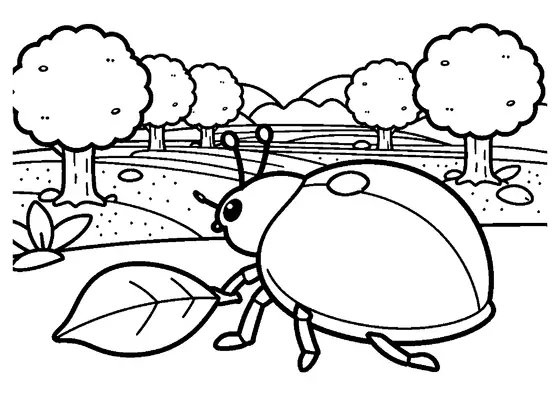
A ladybug rests at the center of a ripe sunflower with spread wings in an open rural field.

A4 format (portrait), black outlines on a white background · for home and classroom use
All coloring pages: Ladybug Coloring Pages
Similar coloring pages: Ladybug Coloring Pages




What else can you print? Free, no account needed
Custom Name Coloring Pages
Enter your child's name to generate a custom coloring page featuring large outline letters to color and decorate.
Open generator →Connect the Dots Generator
Eight connect-the-dots pictures across three difficulty levels. Features faint outline guides for younger children and dots only for older kids.
Open generator →Printables
Worksheets, tracing lines, mazes and dot-to-dots in A4.
Browse printables →
Sunflower Field View Featuring a Ladybug
Positioned at the very center of a mature sunflower, a ladybug spreads its wings in preparation for flight. Wide green leaves branch out beneath the massive floral head, while the surrounding field stretches into the distance. This rural view highlights the connection between flying insects and towering field blossoms.
How Sunflowers Grow and Support Nature
Sunflowers are famous for their remarkable ability to track the sun across the sky while young, a behavior known as heliotropism. Once the heavy seed heads ripen, they face east toward the morning light to attract pollinators and warm visiting insects. A single sunflower head is actually made of thousands of tiny individual flowers that produce nutrient-rich seeds.
Authentic Colors of a Sunflower Scene
- Sunflower petals: bright golden yellow, warm amber, or deep orange
- Flower center: rich dark brown, maroon, or charcoal black
- Sunflower stem and broad leaves: dull forest green or olive green
- Ladybug outer wings: shiny scarlet red or deep orange