
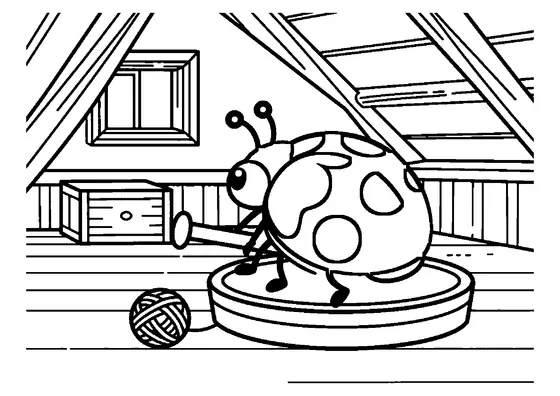
Ladybug on a Brass Compass Aboard a Sailboat
A solitary ladybug rests atop an antique brass compass mounted on the deck of a wooden sailing ship.

A4 format (landscape), black outlines on a white background · for home and classroom use
All coloring pages: Ladybug Coloring Pages
Similar coloring pages: Ladybug Coloring Pages



What else can you print? Free, no account needed
Custom Name Coloring Pages
Enter your child's name to generate a custom coloring page featuring large outline letters to color and decorate.
Open generator →Connect the Dots Generator
Eight connect-the-dots pictures across three difficulty levels. Features faint outline guides for younger children and dots only for older kids.
Open generator →Printables
Worksheets, tracing lines, mazes and dot-to-dots in A4.
Browse printables →
Nautical Ladybug on a Brass Compass
A ladybug finds a temporary resting spot on an antique brass deck compass mounted aboard a wooden sailing ship. Metallic navigation instruments on vessel decks catch sunlight and offer resting stops for traveling insects carried offshore by coastal winds.
Insects at Sea and Maritime Instruments
Strong offshore breezes often blow land-dwelling insects onto sailing ships navigating coastal waterways. Historical deck compasses were housed in heavy brass casings to withstand salty sea air and moisture without rusting. The smooth, metallic surface of a ship's compass retains sun heat, creating a warm resting point for small beetles on maritime voyages.
Colors of Nautical Instruments and Ladybugs
- Ladybug outer shell: fiery red, orange, or amber
- Antique deck compass casing: polished yellow brass or weathered bronze
- Compass glass cover: clear with blue tint reflections
- Wooden vessel deck: teak brown, weathered gray, or dark mahogany