
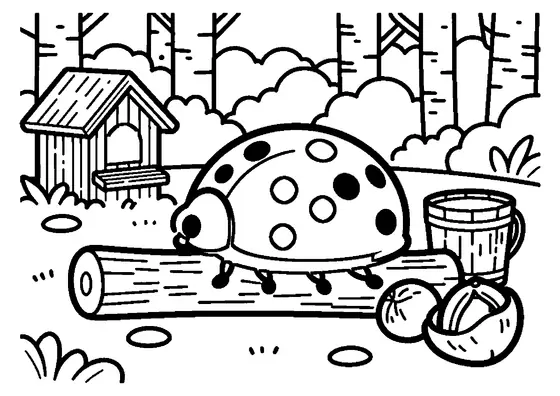
Ladybug in a Woodland Berry Patch
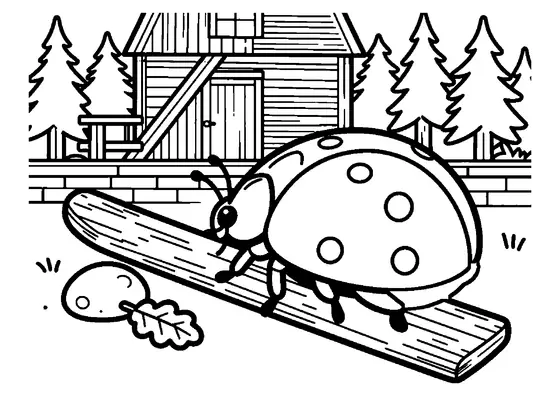
A small spotted ladybug rests quietly on a wild berry branch in a quiet spring woodland.

A4 format (portrait), black outlines on a white background · for home and classroom use
All coloring pages: Ladybug Coloring Pages
Similar coloring pages: Ladybug Coloring Pages

What else can you print? Free, no account needed
Custom Name Coloring Pages
Enter your child's name to generate a custom coloring page featuring large outline letters to color and decorate.
Open generator →Connect the Dots Generator
Eight connect-the-dots pictures across three difficulty levels. Features faint outline guides for younger children and dots only for older kids.
Open generator →Printables
Worksheets, tracing lines, mazes and dot-to-dots in A4.
Browse printables →
Beneficial Insects in Forest Ecosystems
Ladybugs are small beetles often found resting on leaves and fruiting stems in forest berry patches. Their presence helps protect wild plants by consuming agricultural pests like aphids that feed on plant sap.
Natural History of Lady Beetles
Despite their delicate appearance, ladybugs are active predators in wild berry habitats and gardens. Their bright coloration serves as warning coloration to birds and other predators that they taste unpleasant. During cooler months, ladybugs seek shelter under bark or inside dense foliage across spring woodlands.
True Colors of Ladybugs and Forest Berry Plants
- Ladybug wing covers: Bright red or orange with distinct black spots
- Ladybug head and legs: Solid black with tiny white markings near the eyes
- Wild berry foliage: Deep green or vibrant spring green leaves
- Woodland berries: Dark blue, purple, or deep crimson red depending on the species