
Ladybug Beside a Wooden Butterfly House
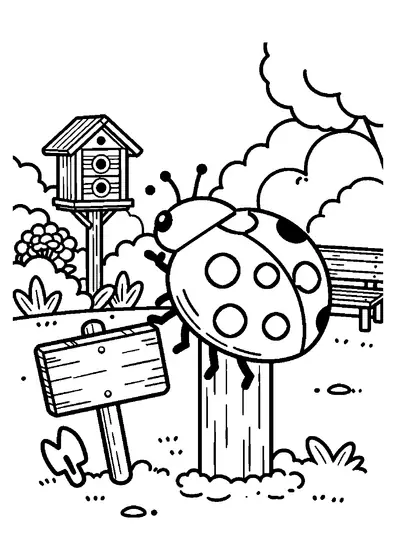
A small ladybug rests near a wooden butterfly house standing in a flower garden.

A4 format (portrait), black outlines on a white background · for home and classroom use
All coloring pages: Ladybug Coloring Pages
Similar coloring pages: Ladybug Coloring Pages
What else can you print? Free, no account needed
Custom Name Coloring Pages
Enter your child's name to generate a custom coloring page featuring large outline letters to color and decorate.
Open generator →Connect the Dots Generator
Eight connect-the-dots pictures across three difficulty levels. Features faint outline guides for younger children and dots only for older kids.
Open generator →Printables
Worksheets, tracing lines, mazes and dot-to-dots in A4.
Browse printables →
Ladybug and Butterfly Shelter in a Flower Garden
A ladybug perches on a wooden post that holds up a butterfly house. Nearby, garden flowers bloom around the shelter, creating a natural setting for garden insects.
Why Insects Use Wooden Shelters
Wooden insect houses provide shelter from wind and heavy rain for beneficial garden creatures. Butterflies often seek dry narrow slots inside such boxes during stormy weather to keep their delicate wings safe. Ladybugs also rely on nearby flowers and vegetation to find small pests like aphids.
Natural Colors of the Garden Scene
- Ladybug: bright red or orange shell with black spots and a black head
- Butterfly house: natural brown wood or weathered gray timber
- Support post: light brown or dark wood tone
- Garden flowers: red, yellow, purple, or white petals with green stems