
Welsh Pony by a Watermill
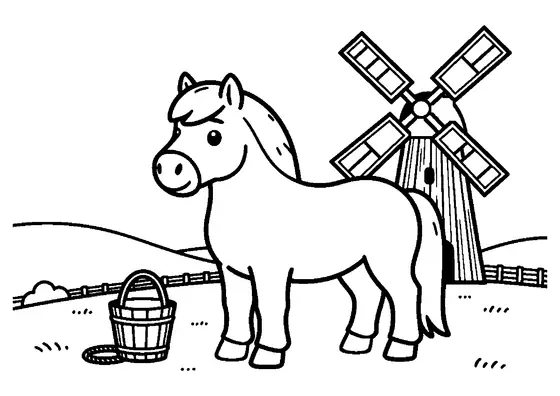
A calm countryside illustration presents a hardy Welsh pony standing on a riverbank near a traditional watermill.

A4 format (landscape), black outlines on a white background · for home and classroom use
All coloring pages: Pony Coloring Pages
Similar coloring pages: Pony Coloring Pages




What else can you print? Free, no account needed
Custom Name Coloring Pages
Enter your child's name to generate a custom coloring page featuring large outline letters to color and decorate.
Open generator →Connect the Dots Generator
Eight connect-the-dots pictures across three difficulty levels. Features faint outline guides for younger children and dots only for older kids.
Open generator →Printables
Worksheets, tracing lines, mazes and dot-to-dots in A4.
Browse printables →
A Welsh Pony in a Countryside Watermill Setting
Welsh ponies often live in rural landscapes where rivers drive historic watermills to grind grain. The combination of flowing water, stonework, and pasture creates a classic farm environment where sturdy mountain breeds thrive.
Fascinating Facts About Watermills and Ponies
Watermills use the natural force of running river water to turn a massive wheel, which drives machinery inside the wooden or stone building. Welsh ponies originated in the rugged hills of Wales, making them naturally sure-footed on slippery riverbanks and rocky soil. Their thick winter coats evolved specifically to withstand rainy European climates near mountain streams.
Real Colors of a Welsh Pony and Riverbank Scene
- Welsh pony coat: Chestnut, bay, gray, black, or palomino
- Watermill timber structure: Weathered brown or dark wood gray
- Millstone and riverbank rocks: Cool gray, charcoal, or slate
- River water: Translucent blue, greenish brown, or silver