
Pinto Horse Beside a Wooden Hay Wagon
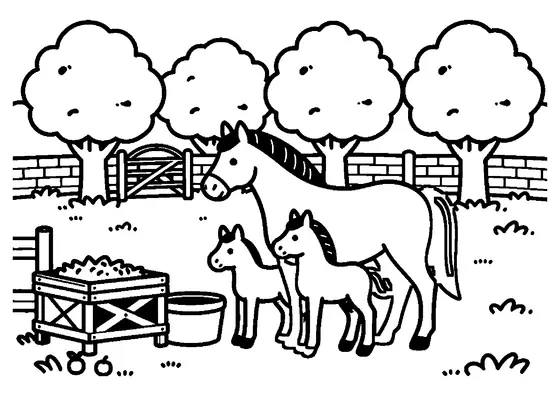
A spotted pinto horse stands beside an old wooden farm wagon loaded with hay.

A4 format (landscape), black outlines on a white background · for home and classroom use
All coloring pages: Horse Coloring Pages
Similar coloring pages: Horse Coloring Pages


What else can you print? Free, no account needed
Custom Name Coloring Pages
Enter your child's name to generate a custom coloring page featuring large outline letters to color and decorate.
Open generator →Connect the Dots Generator
Eight connect-the-dots pictures across three difficulty levels. Features faint outline guides for younger children and dots only for older kids.
Open generator →Printables
Worksheets, tracing lines, mazes and dot-to-dots in A4.
Browse printables →
Pinto Horse Beside a Wooden Hay Wagon
The farm setting includes a pinto horse, a parked wooden wagon, and a load of hay. Pinto describes a bold coat pattern made of white areas and another color rather than a single horse breed. A wagon filled with dried grass fits naturally into farm life because hay is stored and moved as feed for grazing animals when fresh pasture is limited.
Why Farms Store Hay
Hay is grass or another forage crop that has been cut and dried so it can be kept for later use. Farmers protect it from too much moisture because damp hay can spoil and develop mold. Horses need forage as a major part of their diet, so stored hay is especially useful during winter or when pasture growth is poor.
Real-Life Colors of the Horse, Wagon, and Hay
- Pinto coat: white patches paired with black, bay, chestnut, or another darker coat color
- Mane and tail: black, brown, chestnut, white, or a mixture that follows the coat pattern
- Hooves: cream, tan, brownish gray, or nearly black
- Wooden wagon: natural wood can range from pale tan to deep brown and may weather to gray
- Hay: usually straw yellow, muted gold, olive green, or light brown after drying