
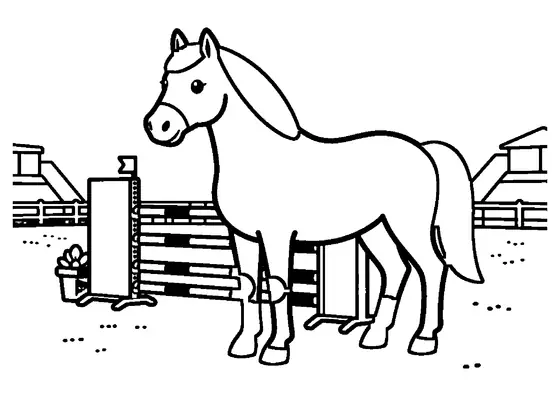
Horse with a Flowing Mane by a Pasture Fence
A horse with a long mane stands gracefully near a timber enclosure bordering an open field.

A4 format (landscape), black outlines on a white background · for home and classroom use
All coloring pages: Horse Coloring Pages
Similar coloring pages: Horse Coloring Pages




What else can you print? Free, no account needed
Custom Name Coloring Pages
Enter your child's name to generate a custom coloring page featuring large outline letters to color and decorate.
Open generator →Connect the Dots Generator
Eight connect-the-dots pictures across three difficulty levels. Features faint outline guides for younger children and dots only for older kids.
Open generator →Printables
Worksheets, tracing lines, mazes and dot-to-dots in A4.
Browse printables →
Equine Life in a Country Pasture
Pastures provide domestic horses with space to graze, exercise, and socialize naturally with herd members. Fencing made of natural post-and-rail timber keeps animals safely contained while allowing them clear views of the surrounding countryside landscape.
Mane Growth and Hair Structure in Horses
A horse's mane serves a functional purpose by protecting the neck from insect bites and channeling rainwater away from the face. Mane thickness and growth length vary by breed, with draught horses and Andalusians often growing thick, wavy hair.
Colors of a Pasture Scene
- Horse mane and tail: Soft flaxen blond, dark chocolate, or raven black
- Horse body coat: Reddish chestnut, warm bay, or dappled gray
- Pasture fence timber: Weathered brown, aged silver-gray, or rustic tan
- Meadow grass: Deep emerald green or sun-bleached golden yellow