
Horse in a Meadow on a Windy Day
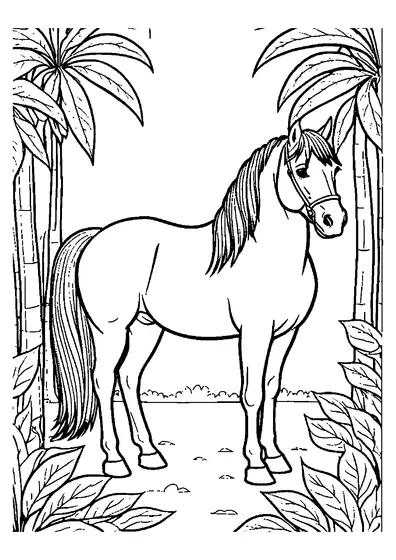
A bridled horse stands in profile in a breezy meadow, with rolling hills, clouds, and a radiant sun behind it.

A4 format (landscape), black outlines on a white background · for home and classroom use
All coloring pages: Horse Coloring Pages
Similar coloring pages: Horse Coloring Pages



What else can you print? Free, no account needed
Custom Name Coloring Pages
Enter your child's name to generate a custom coloring page featuring large outline letters to color and decorate.
Open generator →Connect the Dots Generator
Eight connect-the-dots pictures across three difficulty levels. Features faint outline guides for younger children and dots only for older kids.
Open generator →Printables
Worksheets, tracing lines, mazes and dot-to-dots in A4.
Browse printables →
The horse in the meadow landscape
The horse is viewed from the side while standing calmly on open ground. It wears a bridle around its head, an item used to guide a horse through gentle signals from a handler or rider. Rolling hills extend across the background, and the sky contains both clouds and a shining sun while the scene conveys a windy day.
Interesting facts about horses in windy weather
Horses have a wide field of vision and highly mobile ears, which help them monitor activity around them in open landscapes. On windy days, unfamiliar sounds and moving vegetation can make some horses more alert because gusts may mask noises or carry new scents. A calm, familiar environment can help a horse remain settled.
Real-life colors of the horse and meadow
- Horse coat: bay brown, chestnut, black, white, gray, cream, or patterned
- Mane and tail: black, brown, flaxen, white, gray, or mixed
- Hooves: dark slate, brown, cream, or striped
- Bridle: commonly brown or black leather, sometimes paired with silver-colored metal
- Meadow and hills: fresh green, yellow-green, golden, or earthy brown depending on the season