
Girl and Pony by an Old Wooden Watermill
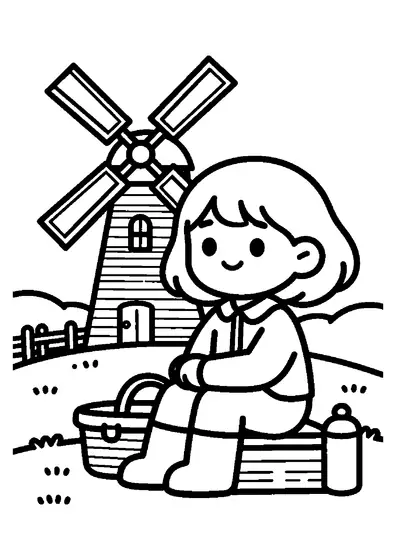
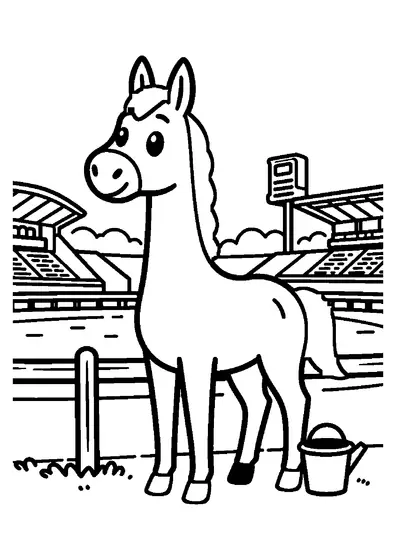
A girl walks alongside her gentle pony next to a rustic wooden watermill with a large turning waterwheel.

A4 format (landscape), black outlines on a white background · for home and classroom use
All coloring pages: Horse Coloring Pages
Similar coloring pages: Horse Coloring Pages


What else can you print? Free, no account needed
Custom Name Coloring Pages
Enter your child's name to generate a custom coloring page featuring large outline letters to color and decorate.
Open generator →Connect the Dots Generator
Eight connect-the-dots pictures across three difficulty levels. Features faint outline guides for younger children and dots only for older kids.
Open generator →Printables
Worksheets, tracing lines, mazes and dot-to-dots in A4.
Browse printables →
Countryside Stroll Beside a Historic Watermill
A peaceful afternoon stroll brings a young girl and her companion pony past an old wooden watermill. The historic mill features a large wooden waterwheel positioned beside a flowing stream in the countryside.
How Traditional Wooden Watermills Work
Traditional watermills capture the kinetic energy of flowing river water using a large vertical wheel fitted with paddles or buckets. As water turns the wheel, internal wooden gears drive heavy millstones that grind grain into flour.
Colors of Historic Watermills and Countryside Scenes
- Watermill wooden walls: Weathered cedar gray, mossy brown, or dark oak
- Waterwheel blades: Wet dark timber with mossy green algae touches
- Girl's walking attire: Soft pink jacket, blue denim jeans, and brown boots
- Pony fur coat: Chestnut brown, dun, or piebald black-and-white patches