
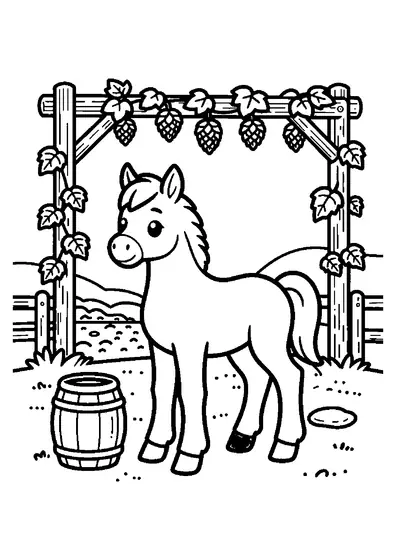
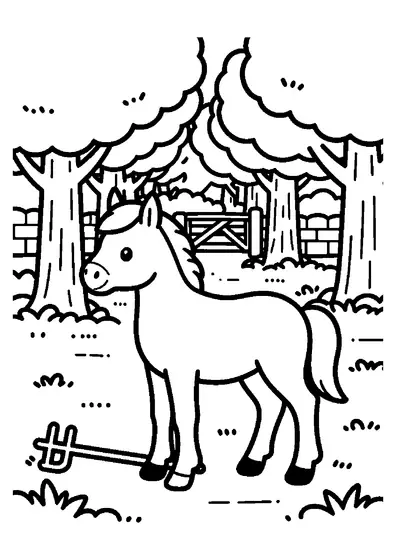
Foal by an Old Estate Granary Coloring Page
An energetic young horse trots past the stone and timber structure of an ancient country estate granary.

A4 format (landscape), black outlines on a white background · for home and classroom use
All coloring pages: Foal Coloring Pages
Similar coloring pages: Foal Coloring Pages




What else can you print? Free, no account needed
Custom Name Coloring Pages
Enter your child's name to generate a custom coloring page featuring large outline letters to color and decorate.
Open generator →Connect the Dots Generator
Eight connect-the-dots pictures across three difficulty levels. Features faint outline guides for younger children and dots only for older kids.
Open generator →Printables
Worksheets, tracing lines, mazes and dot-to-dots in A4.
Browse printables →
Trotting Horse at the Historic Granary
A lively young horse trots across the grounds of a historical country estate. Standing beside the pathway is a traditional estate granary used for storing harvested grains and agricultural feed.
Historic Country Estate Buildings
Granaries were essential structures on historical country estates, built with elevated floors and strong ventilation to protect harvested grain from moisture and pests. Traditional estates often featured dedicated horse stables situated near storage buildings to facilitate easy feeding and daily care. Today, many of these architectural landmarks are preserved as historic heritage sites.
Natural Colors of Historic Estate Grounds
- Foal coat: dappled gray, black, or reddish chestnut
- Granary wall stone: warm gray, beige, or off-white masonry
- Wooden granary doors: dark brown or weathered timber
- Granary roof: dark slate gray or terracotta red tiles
- Foal mane and tail: dark brown, flaxen blond, or black