
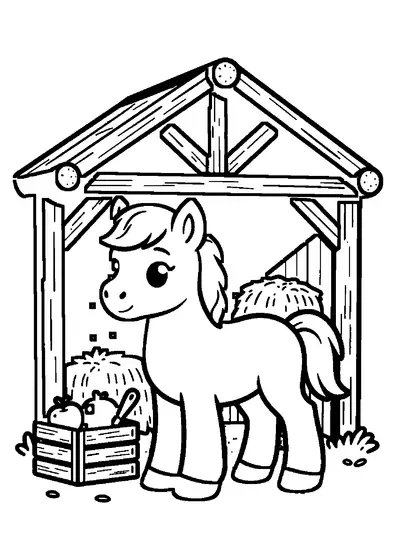
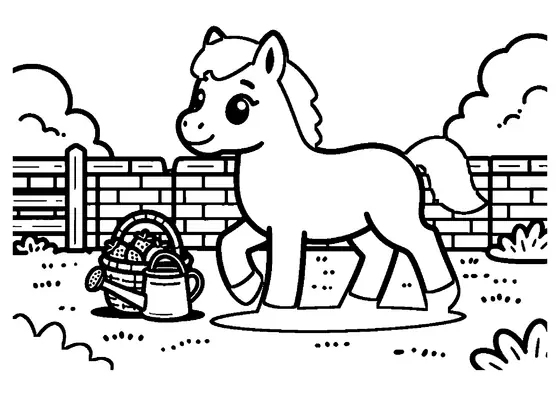
Foal by a Hay Feeder in a Spring Paddock
A foal stands near a stable hay feeder filled with fresh forage inside a spring paddock.

A4 format (landscape), black outlines on a white background · for home and classroom use
All coloring pages: Foal Coloring Pages
Similar coloring pages: Foal Coloring Pages



What else can you print? Free, no account needed
Custom Name Coloring Pages
Enter your child's name to generate a custom coloring page featuring large outline letters to color and decorate.
Open generator →Connect the Dots Generator
Eight connect-the-dots pictures across three difficulty levels. Features faint outline guides for younger children and dots only for older kids.
Open generator →Printables
Worksheets, tracing lines, mazes and dot-to-dots in A4.
Browse printables →
Springtime Foal Beside a Hay Feeder
Outdoor paddocks offer open air space for young horses during spring months. Situated near a feeder filled with fresh hay, a foal remains close to forage in the paddock area.
How Hay Feeders Function in Farm Paddocks
Paddock feeders hold harvested grass and legume hay off the ground to keep feed clean and dry during changing spring weather. Elevated slats allow horses to pull out small bites slowly, mimicking natural grazing habits and promoting healthy digestion.
Realistic Colors of Spring Paddocks and Feeders
- Foal coat: roan, dark brown, chestnut, or piebald pattern
- Hay inside feeder: golden yellow, pale green, or dry light tan
- Paddock hay feeder: dark wood stain, weathered gray timber, or coated metal
- Paddock ground: green grass and dark soil