
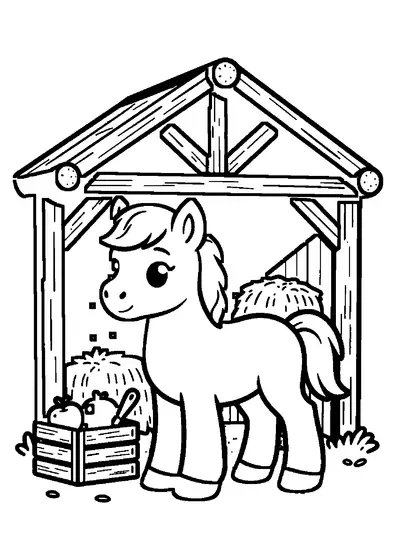
Foal Beside an Oat Chest in the Stable
Young horses spending time inside a stable often stand near storage boxes containing feed.

A4 format (portrait), black outlines on a white background · for home and classroom use
All coloring pages: Foal Coloring Pages
Similar coloring pages: Foal Coloring Pages



What else can you print? Free, no account needed
Custom Name Coloring Pages
Enter your child's name to generate a custom coloring page featuring large outline letters to color and decorate.
Open generator →Connect the Dots Generator
Eight connect-the-dots pictures across three difficulty levels. Features faint outline guides for younger children and dots only for older kids.
Open generator →Printables
Worksheets, tracing lines, mazes and dot-to-dots in A4.
Browse printables →
Young Foal Near an Oat Chest in the Stable
Life inside a barn involves quiet moments where a young horse rests close to farm equipment and storage containers. Wooden chests placed in barn aisles keep grain dry and safe from moisture, giving young animals a calm place to relax during feeding hours.
How Young Horses Eat Grain
Foals begin nibbling on solid grains like oats alongside their mother's milk within a few weeks of birth. Oats provide easy-to-digest carbohydrates and energy that help growing equine bones and muscles develop properly.
Real Colors of Horses and Stable Feed
- Foal coat: Bay, chestnut, black, or gray depending on breed
- Foal mane and tail: Dark brown, black, or flaxen blonde
- Foal hooves: Slate gray or dark brown with smooth texture
- Oats: Soft cream, pale yellow, or light beige grains
- Wooden chest: Warm cedar, natural pine, or rustic brown wood