
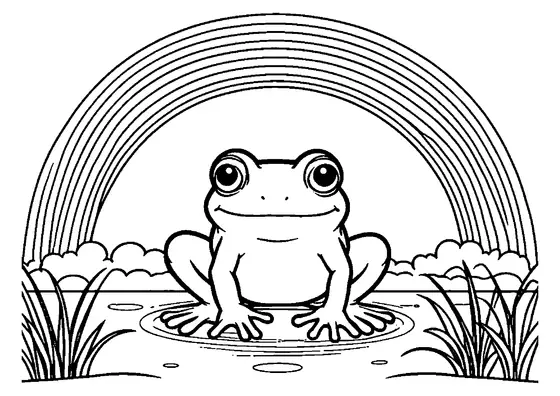
Frog Climbing onto the Pond Bank
A large frog climbs from the pond toward a bank surrounded by water lilies and dense reeds.

A4 format (landscape), black outlines on a white background · for home and classroom use
All coloring pages: Animal Coloring Pages
Similar coloring pages: Animal Coloring Pages




What else can you print? Free, no account needed
Custom Name Coloring Pages
Enter your child's name to generate a custom coloring page featuring large outline letters to color and decorate.
Open generator →Connect the Dots Generator
Eight connect-the-dots pictures across three difficulty levels. Features faint outline guides for younger children and dots only for older kids.
Open generator →Printables
Worksheets, tracing lines, mazes and dot-to-dots in A4.
Browse printables →
Frog Climbing onto the Pond Bank
The frog is shown from the side in the center of the scene, with its body raised as it climbs onto the pond bank. Below it, the water’s surface holds water lily leaves, while thick groups of reeds grow along both sides. Together, the pond, floating leaves, and tall waterside plants place the animal in a recognizable freshwater habitat.
Facts about frogs at the edge of a pond
Frogs often move between water and land because different parts of their lives depend on both habitats. A pond bank gives them access to damp shelter, insects, and nearby water, while water lilies and reeds can provide cover from larger animals. Their strong hind legs help them jump on land and propel themselves through water.
Real colors of frogs and pond plants
- Frog skin: commonly green, brown, tan, or a mixture of mottled earth tones
- Frog eyes: often gold, copper, brown, or dark reddish brown with black pupils
- Water lily leaves: medium to deep green, sometimes with reddish or purple undersides
- Reeds: green during active growth, changing to tan or golden brown when dry
- Pond water: clear in a small sample, but often appearing blue, green, brown, or gray because of reflections and sediment