
Submarine in a Rocky Underwater Canyon
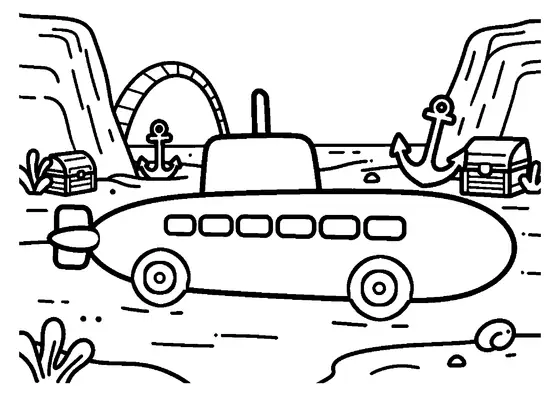
A specialized research submarine glides through a deep ocean canyon over sunken crates, anchors, coral formations, and seaweed.

A4 format (landscape), black outlines on a white background · for home and classroom use
All coloring pages: Fish and Ocean Life Coloring Pages
Similar coloring pages: Fish and Ocean Life Coloring Pages




What else can you print? Free, no account needed
Custom Name Coloring Pages
Enter your child's name to generate a custom coloring page featuring large outline letters to color and decorate.
Open generator →Connect the Dots Generator
Eight connect-the-dots pictures across three difficulty levels. Features faint outline guides for younger children and dots only for older kids.
Open generator →Printables
Worksheets, tracing lines, mazes and dot-to-dots in A4.
Browse printables →
Oceanographic Exploration in Submarine Canyons
A research submarine navigates through a steep ocean floor canyon surrounded by natural rocky arches. Rested on the seabed below the vehicle are a wooden storage crate and a heavy iron anchor, partially covered by ocean flora. Vibrant marine coral structures and swaying seaweed attached to the canyon walls complete the underwater environment.
Submersible Operations in Deep Canyons
Deep ocean canyons are carved by underwater currents and tectonic activity far below the reach of sunlight. Research submarines use high-pressure titanium hulls to withstand crushing water pressures at extreme depths. Powerful external floodlights and robotic arms allow marine scientists to inspect submerged artifacts and collect marine biological specimens.
True Colors of Deep Sea Environments
- Research submarine outer hull: bright safety yellow, international orange, or stark white
- Submerged iron anchor: dark rust brown, tarnished black, or ocean green algae coat
- Canyon rock arches: slate gray, dark basalt black, or muddy brown
- Coral formations: pastel pink, bright orange, purple, or lime green
- Seaweed leaves: deep olive green, emerald, or golden brown kelp