
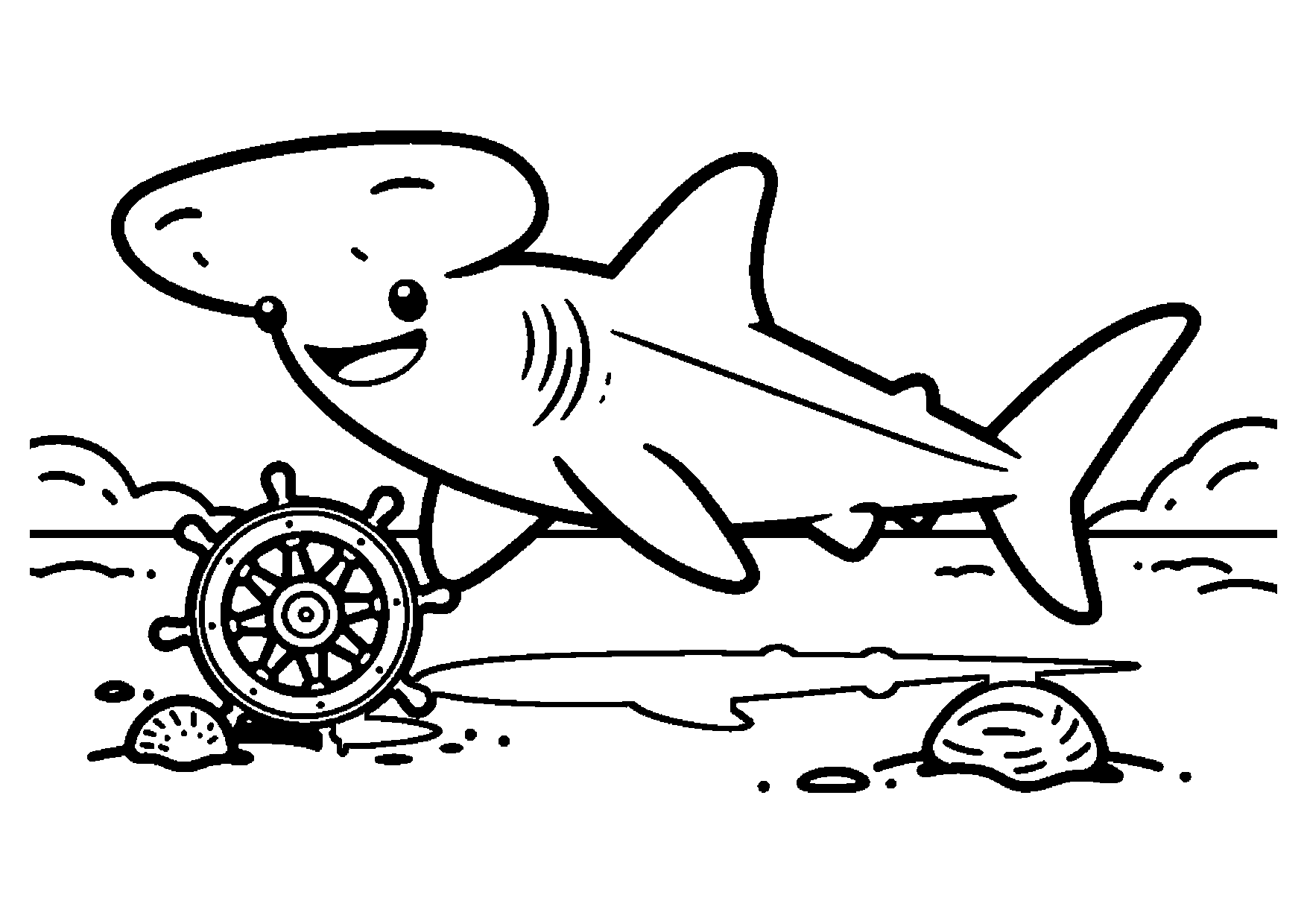
Hammerhead Shark Above a Rippling Sandbank
A calm hammerhead shark swims over a sandy seafloor shaped into gentle ripples.
A4 format (landscape), black outlines on a white background · for home and classroom use
All coloring pages: Fish and Ocean Life Coloring Pages
Similar coloring pages: Fish and Ocean Life Coloring Pages


What else can you print? Free, no account needed
Custom Name Coloring Pages
Enter your child's name to generate a custom coloring page featuring large outline letters to color and decorate.
Open generator →Connect the Dots Generator
Eight connect-the-dots pictures across three difficulty levels. Features faint outline guides for younger children and dots only for older kids.
Open generator →Printables
Worksheets, tracing lines, mazes and dot-to-dots in A4.
Browse printables →
A hammerhead shark above the sandbank
The shark moves through open water above a rippled sandy seabed. Its broad, flattened head is the feature that distinguishes it from other sharks, while its streamlined body and fins help it travel efficiently through the sea. The simple setting keeps attention on the animal and the patterns formed by the sand below.
Surprising facts about hammerhead sharks
A hammerhead’s widely spaced eyes give it an unusually broad field of view. Special sensory organs across its head can detect faint electrical signals made by living animals, helping the shark investigate prey hidden beneath sand.
Natural colors of the shark and seabed
- Upper body: commonly gray, olive-gray, or gray-brown
- Underside: pale gray to white
- Eyes: very dark brown or black
- Fins: usually the same muted gray as the upper body
- Sandy seabed: beige, tan, pale gold, or light brown