
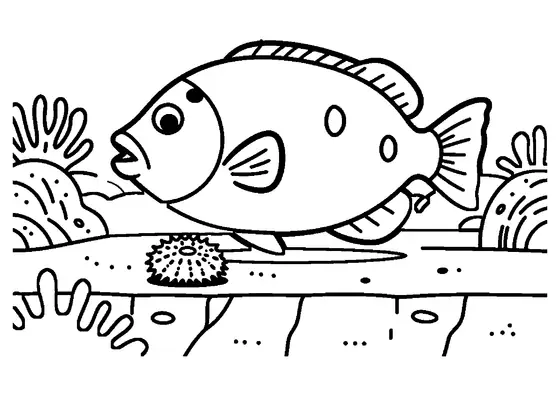
Blue Tang Swimming Beside a Fan Coral
A vivid Blue Tang swims beside a broad Fan Coral in an ocean scene centered on tropical marine life.

A4 format (landscape), black outlines on a white background · for home and classroom use
All coloring pages: Fish and Ocean Life Coloring Pages
Similar coloring pages: Fish and Ocean Life Coloring Pages




What else can you print? Free, no account needed
Custom Name Coloring Pages
Enter your child's name to generate a custom coloring page featuring large outline letters to color and decorate.
Open generator →Connect the Dots Generator
Eight connect-the-dots pictures across three difficulty levels. Features faint outline guides for younger children and dots only for older kids.
Open generator →Printables
Worksheets, tracing lines, mazes and dot-to-dots in A4.
Browse printables →
A Blue Tang Beside Fan Coral
The Blue Tang appears next to a large Fan Coral beneath the sea. Its flattened body is well suited to moving around reef habitats, while the branching coral creates a distinctive underwater backdrop. The fish's strong natural color pattern makes it one of the most recognizable tropical reef species.
Reef Facts About Blue Tangs
Blue tangs graze on algae growing in reef environments, helping prevent it from covering surfaces where other organisms live. They can shelter within reef crevices when threatened. A sharp spine near the base of the tail is used for defense, which is why tangs are also commonly called surgeonfish.
Real-Life Colors of a Blue Tang and Fan Coral
- Blue Tang body: rich royal blue
- Body markings: deep navy blue or black
- Tail fin: bright yellow, sometimes with darker edging
- Eyes: dark brown to black with a yellowish surrounding area
- Fan Coral: red, orange, purple, yellow, or brown, depending on the species