
Terrier in a Rocky Cove
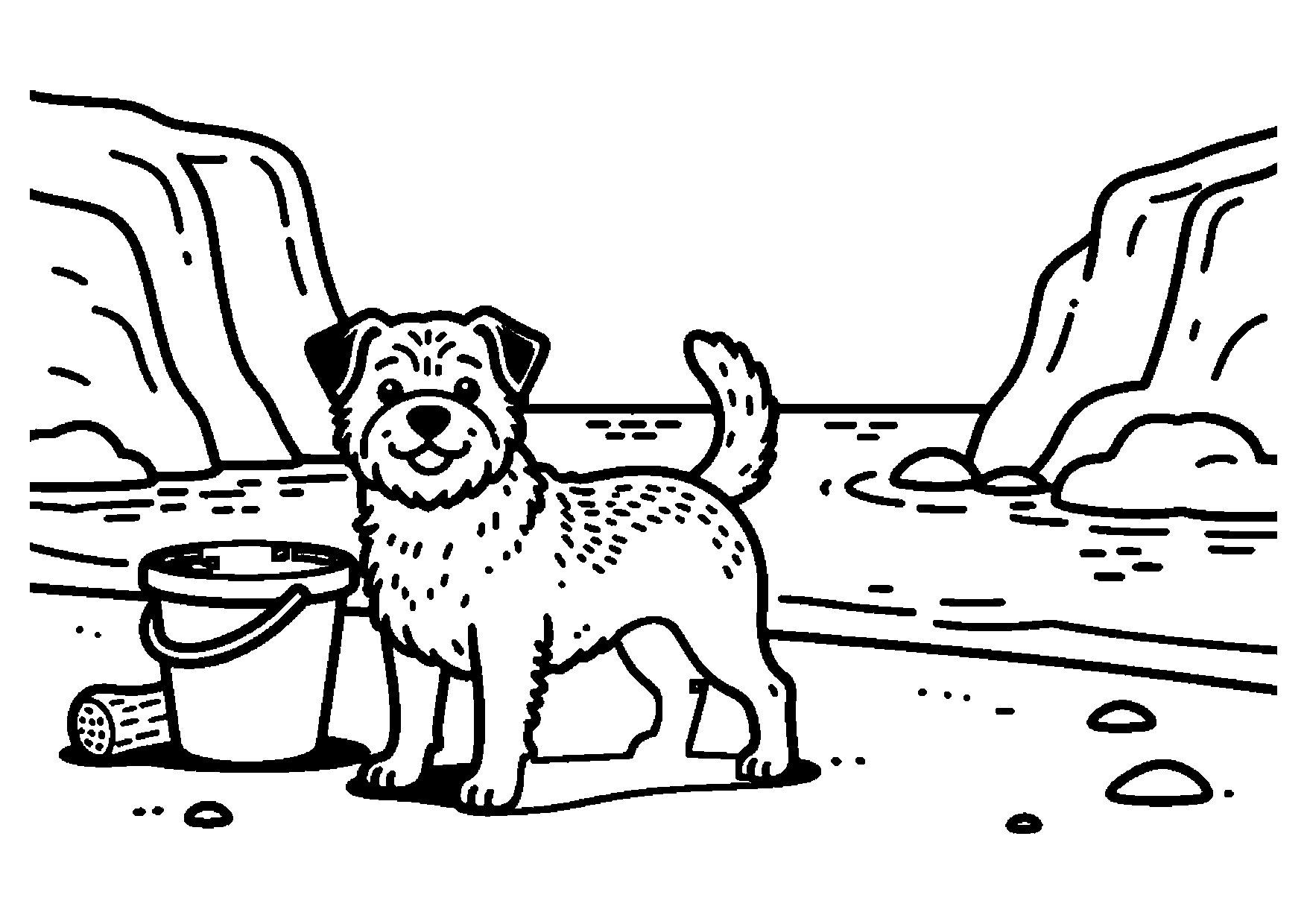
A small terrier explores a sandy beach inside a quiet rocky cove surrounded by steep cliffs, ocean waves, a log, and a bucket.
A4 format (landscape), black outlines on a white background · for home and classroom use
All coloring pages: Dog Coloring Pages
Similar coloring pages: Dog Coloring Pages


What else can you print? Free, no account needed
Custom Name Coloring Pages
Enter your child's name to generate a custom coloring page featuring large outline letters to color and decorate.
Open generator →Connect the Dots Generator
Eight connect-the-dots pictures across three difficulty levels. Features faint outline guides for younger children and dots only for older kids.
Open generator →Printables
Worksheets, tracing lines, mazes and dot-to-dots in A4.
Browse printables →
Coastal Exploration with a Small Terrier in a Rocky Cove
At the edge of the ocean, a small terrier stands on the sand near a fallen log and a bucket. High coastal cliffs wall in the quiet cove, while gentle ocean waves roll onto the shore to form a secluded seaside environment.
How Ocean Waves Shape Coastal Coves and Cliffs
Coastal coves form over thousands of years as ocean waves gradually erode softer rock layers along shoreline cliffs. This natural erosion creates sheltered, horseshoe-shaped bays that protect beaches from harsh sea currents and provide calm resting spots for coastal wildlife.
Realistic Shades of Coastal Coves and Beach Terriers
- Terrier coat: Tan, black, white, grizzle, or reddish-brown wire hair
- Ocean waves: Deep blue, turquoise, or light aqua with white foam crests
- Rocky cliffs: Layered gray granite, dark brown stone, or beige sandstone
- Sandy beach: Pale yellow, cream, or golden tan sand
- Fallen driftwood log: Bleached light gray or weathered dark brown wood