
Springer Spaniel in a Reedy Cove
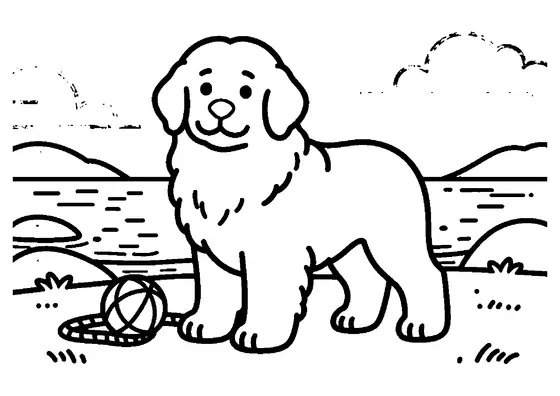
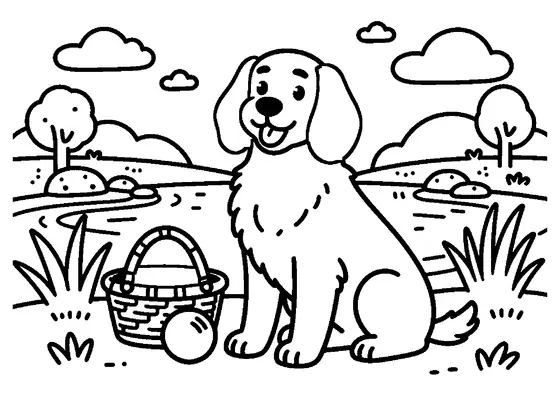
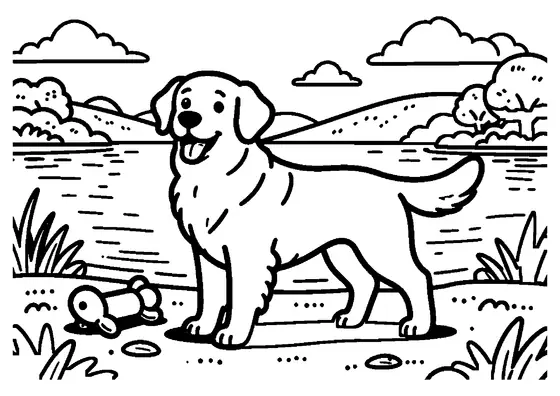
A Springer Spaniel stands along a peaceful cove near tall shore reeds, gentle water waves, willow trees, a basket, and a play ball.

A4 format (landscape), black outlines on a white background · for home and classroom use
All coloring pages: Dog Coloring Pages
Similar coloring pages: Dog Coloring Pages



What else can you print? Free, no account needed
Custom Name Coloring Pages
Enter your child's name to generate a custom coloring page featuring large outline letters to color and decorate.
Open generator →Connect the Dots Generator
Eight connect-the-dots pictures across three difficulty levels. Features faint outline guides for younger children and dots only for older kids.
Open generator →Printables
Worksheets, tracing lines, mazes and dot-to-dots in A4.
Browse printables →
Springer Spaniel in a Waterfront Cove
A Springer Spaniel stands near the water edge in a tranquil coastal cove. The surrounding scenery includes tall marsh reeds, gentle water waves, willow trees overhead, and play props such as a basket and ball resting on the shoreline.
Facts About Springer Spaniels and Coastal Wetlands
English Springer Spaniels were originally bred as hunting dogs designed to flush game out of dense brush and tall waterside reeds. Their weather-resistant double coat protects them from cold water while swimming in lakes and coves. Willow trees frequently grow along wet riverbanks and coves because their deep roots thrive in moist soil.
Natural Colors of a Springer Spaniel and Cove Landscape
- Springer Spaniel coat: liver and white, or black and white, often with tan markings
- Cove water waves: soft blue, turquoise, or deep navy water
- Marsh reeds: golden tan, olive green, or dried brown
- Willow tree leaves: silvery green or soft yellow-green
- Shoreline pebbles and sand: light gray, tan, or dark brown