
Poodle in a Pottery Studio
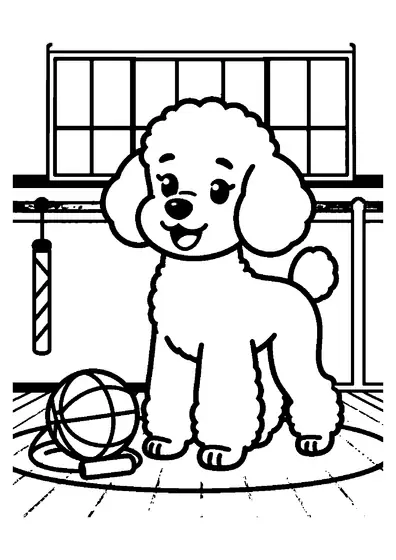
An elegant poodle sits calmly beside a large ceramic bowl inside a ceramic artist's studio with storage shelves and a kiln.

A4 format (portrait), black outlines on a white background · for home and classroom use
All coloring pages: Dog Coloring Pages
Similar coloring pages: Dog Coloring Pages



What else can you print? Free, no account needed
Custom Name Coloring Pages
Enter your child's name to generate a custom coloring page featuring large outline letters to color and decorate.
Open generator →Connect the Dots Generator
Eight connect-the-dots pictures across three difficulty levels. Features faint outline guides for younger children and dots only for older kids.
Open generator →Printables
Worksheets, tracing lines, mazes and dot-to-dots in A4.
Browse printables →
A Poodle Visiting an Artist's Pottery Studio
Inside a bright pottery workshop, an attentive poodle sits on the floor near a handcrafted clay vessel. In the background, open wooden shelves display cured pots, and a heavy pottery kiln stands ready for firing.
Discovering Poodles and Ceramic Art
Poodles originally served as duck-retrieving water dogs in Germany, where their distinct haircuts protected vital joints from cold water. Pottery kilns can reach extreme temperatures exceeding two thousand degrees Fahrenheit to transform soft clay into durable ceramic stone. Clay work is one of humanity's oldest crafts, dating back tens of thousands of years across worldwide cultures.
Authentic Colors of Poodles and Clay Work
- Poodle coat: black, white, apricot, gray, or silver
- Wet studio clay: grayish brown, terracotta orange, or dark red
- Fired pottery pots: warm rust red, cream, or blue glaze
- Kiln exterior: metallic gray or matte black steel