
Siberian Husky at a Polar Weather Station
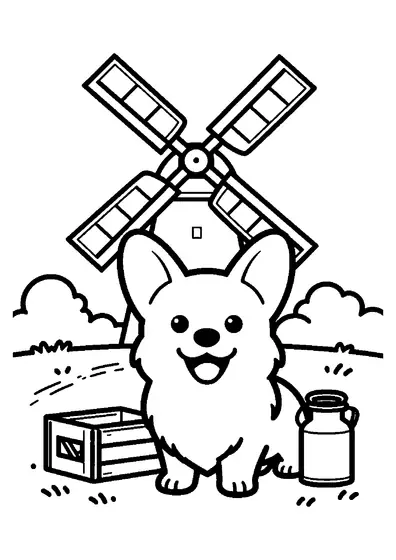
A Siberian Husky stands in the snow near a polar weather station equipped with a wind tower and a wooden sled.

A4 format (portrait), black outlines on a white background · for home and classroom use
All coloring pages: Dog Breed Coloring Pages
Similar coloring pages: Dog Breed Coloring Pages




What else can you print? Free, no account needed
Custom Name Coloring Pages
Enter your child's name to generate a custom coloring page featuring large outline letters to color and decorate.
Open generator →Connect the Dots Generator
Eight connect-the-dots pictures across three difficulty levels. Features faint outline guides for younger children and dots only for older kids.
Open generator →Printables
Worksheets, tracing lines, mazes and dot-to-dots in A4.
Browse printables →
Polar Expedition with a Siberian Husky
A Siberian Husky explores a snowy Arctic weather research station featuring a tall wind monitoring tower and a traditional wooden sled. Built to withstand extreme sub-zero weather, polar stations rely on specialized equipment to record atmospheric data. Huskies have long played a vital role in Arctic travel, pulling sleds loaded with supplies across deep snow.
Incredible Facts About Huskies in Arctic Climates
Siberian Huskies were bred by the Chukchi people of northeastern Asia to pull light loads over vast distances in freezing arctic conditions. Their thick double coat acts as thermal insulation, allowing them to sleep comfortably in snow temperatures far below zero. Their almond-shaped eyes help squint against blinding white snow reflections.
True Colors of a Siberian Husky and Polar Station Equipment
- Fur coat: Mix of black, gray, copper, or white with distinct facial mask patterns
- Eyes: Piercing ice blue, warm brown, or one blue and one brown eye (heterochromia)
- Wooden sled: Natural light wood, dark timber, or weathered ash
- Wind tower: Metallic silver steel or painted high-visibility orange and white
- Polar snow: Crisp white with pale blue or soft gray shadows