
Old English Sheepdog by a Windmill
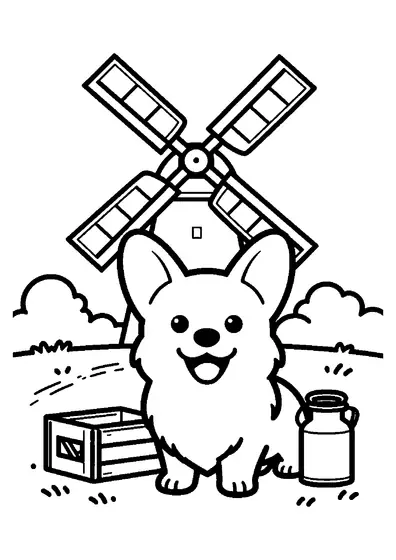
A long-haired Old English Sheepdog stands atop a grassy hill overlooking a traditional country windmill.

A4 format (portrait), black outlines on a white background · for home and classroom use
All coloring pages: Dog Breed Coloring Pages
Similar coloring pages: Dog Breed Coloring Pages




What else can you print? Free, no account needed
Custom Name Coloring Pages
Enter your child's name to generate a custom coloring page featuring large outline letters to color and decorate.
Open generator →Connect the Dots Generator
Eight connect-the-dots pictures across three difficulty levels. Features faint outline guides for younger children and dots only for older kids.
Open generator →Printables
Worksheets, tracing lines, mazes and dot-to-dots in A4.
Browse printables →
An Old English Sheepdog near a Rural Windmill
This outdoor scene presents a shaggy Old English Sheepdog positioned on a grassy slope. In the background, a rustic windmill stands against the sky, grounding the dog in a classic rural farming atmosphere. The illustration highlights the breed's traditional association with open pastures and agricultural landscapes.
History of the Old English Sheepdog
Developed in the pastoral counties of England during the eighteenth century, the Old English Sheepdog was bred to drive cattle and sheep to city markets. Farmers frequently docked their tails to show they were working dogs exempt from companion dog taxes, leading to their nickname "Bobtail." Their thick, double-layered coat shielded them from cold winds and rain on the open hillsides.
Authentic Colors of a Sheepdog and Windmill Landscape
- Old English Sheepdog fur: combination of white on the head and neck, with gray, grizzle, or blue-gray across the hindquarters
- Grass on the hill: rich meadow green with patches of straw-colored dry grass
- Windmill sails and body: weathered brown timber or whitewashed brick walls
- Sheepdog eyes: dark brown or occasionally light blue, often hidden beneath facial hair