
Golden Retriever on a Sandy Beach
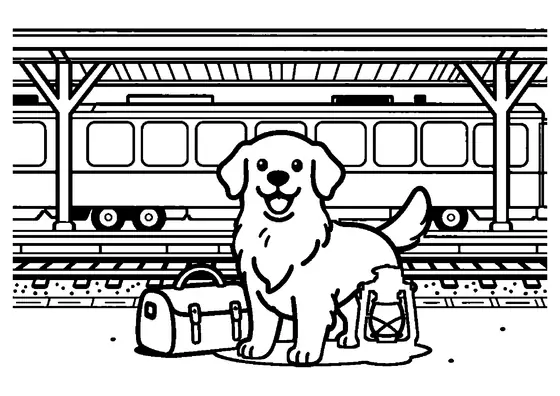
A friendly Golden Retriever stands on a wide sandy beach next to a play bucket and a flying disc near ocean waves and dunes.

A4 format (landscape), black outlines on a white background · for home and classroom use
All coloring pages: Dog Breed Coloring Pages
Similar coloring pages: Dog Breed Coloring Pages




What else can you print? Free, no account needed
Custom Name Coloring Pages
Enter your child's name to generate a custom coloring page featuring large outline letters to color and decorate.
Open generator →Connect the Dots Generator
Eight connect-the-dots pictures across three difficulty levels. Features faint outline guides for younger children and dots only for older kids.
Open generator →Printables
Worksheets, tracing lines, mazes and dot-to-dots in A4.
Browse printables →
Golden Retriever at the Ocean Beach
This coastal scene depicts a friendly Golden Retriever standing on a sandy shore. Surrounding elements include sand dunes, ocean waves, a play bucket, and a frisbee resting on the sand.
Golden Retrievers and Swimming
Golden Retrievers were originally developed in Scotland during the nineteenth century to retrieve waterfowl from both land and water. They possess a dense, water-repellent double coat that keeps them warm even in cold ocean tides. Their webbed toes make them natural swimmers capable of navigating coastal waters with ease.
Real Colors of Golden Retrievers and Beach Scenes
- Golden Retriever coat: Shades of light golden, rich golden, or dark golden yellow
- Dog nose and eyes: Black or dark brown nose with warm brown eyes
- Sandy shore and dunes: Pale cream, light tan, or warm golden sand
- Ocean water and waves: Deep blue, turquoise, or light aqua with white foam
- Beach bucket and frisbee: Vibrant colors like red, yellow, orange, or blue